

If you own a Tesla, you’ve probably asked this question: Should I go with vinyl, paint protection film (PPF), or color PPF?
The options are endless. The marketing is confusing. And the price differences are real.
In this guide, we’ll break down:
- What each film is made of
- How they’re installed
- How thick and durable they are
- What they cost
- Which one makes sense for your Tesla
Let’s simplify it.
Vinyl Wrap: Built for Color Change

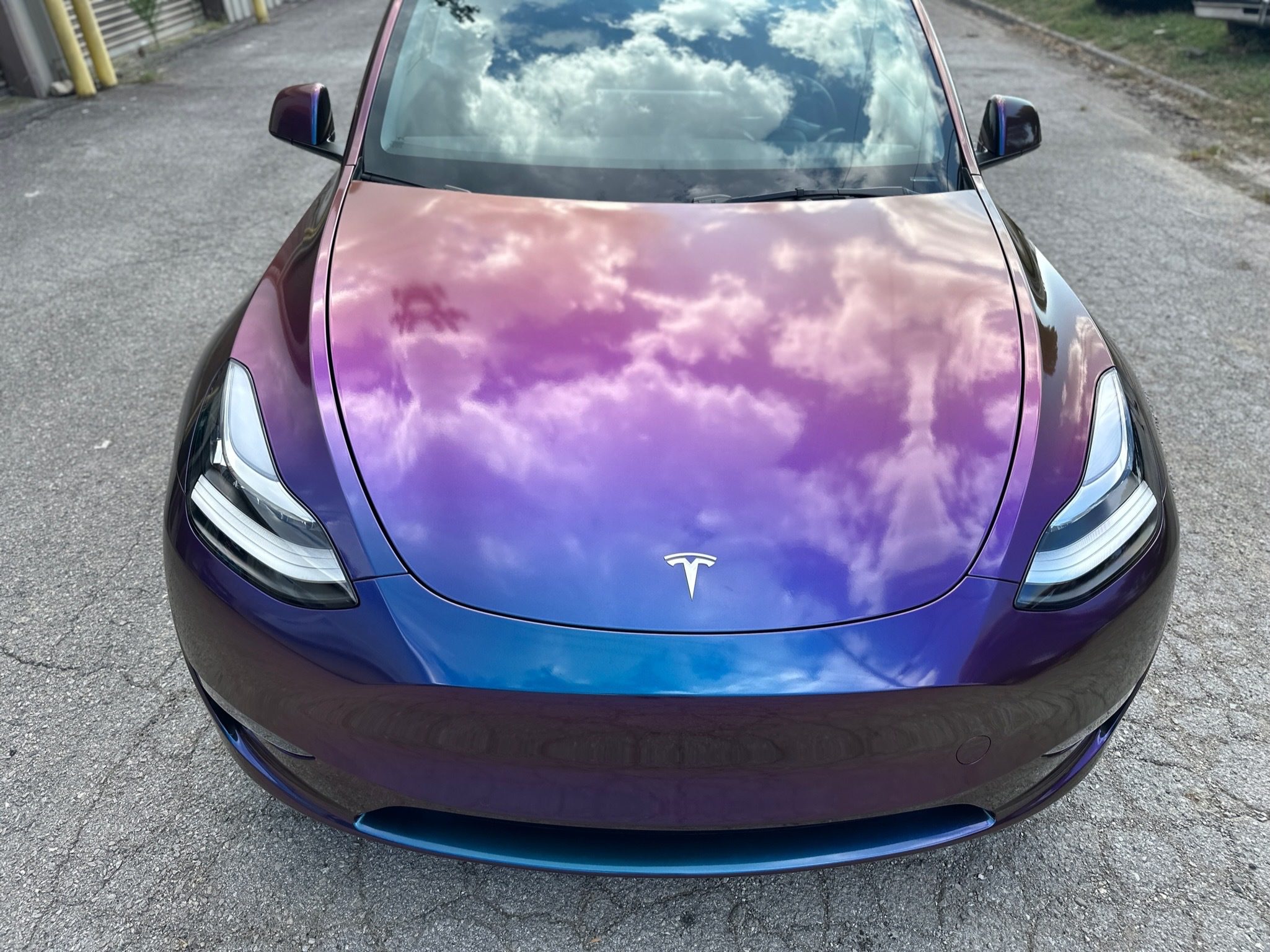

What Is Vinyl?
Vinyl wrap is made from polyvinyl chloride (PVC).
It was designed primarily to change the color of your vehicle, not to protect it from impact.
Popular brands include:
- Avery Dennison
- 3M
- Hexis
- Orafol
Modern vinyl is far easier to install than older generations. It slides well, stretches cleanly, and has air-release technology.
If you’re starting today, you’re lucky.
How Vinyl Is Installed
Most modern vinyl is a dry install.
Installers use:
- A felt or microfiber squeegee
- Heat for post-heating
- A “four-corner stretch” technique
- 50% overlapping strokes
Vinyl is thinner and very memory-based. If you wrinkle it, you can often lift it, heat it, and it relaxes back into place.
That makes it one of the easiest films to learn.
Thickness and Protection
Typical vinyl thickness: ~100–110 microns
That’s roughly half the thickness of PPF.
Vinyl:
- Made for color change/aesthetic appearances
- Self-heals micro scratches only
- Does not stop rock chips
- Is not designed for impact resistance
It protects from minor scuffs and UV fading, but not much else. However, there are thousands of colors and design options available with vinyl.
Cost
Material cost:
- $700 to $900 for a roll
Installed full car wrap:
- $3,500 to $6,500 depending on region and type of vinyl wrap
Vinyl remains the budget king for color change.
Paint Protection Film (PPF): Built for Protection
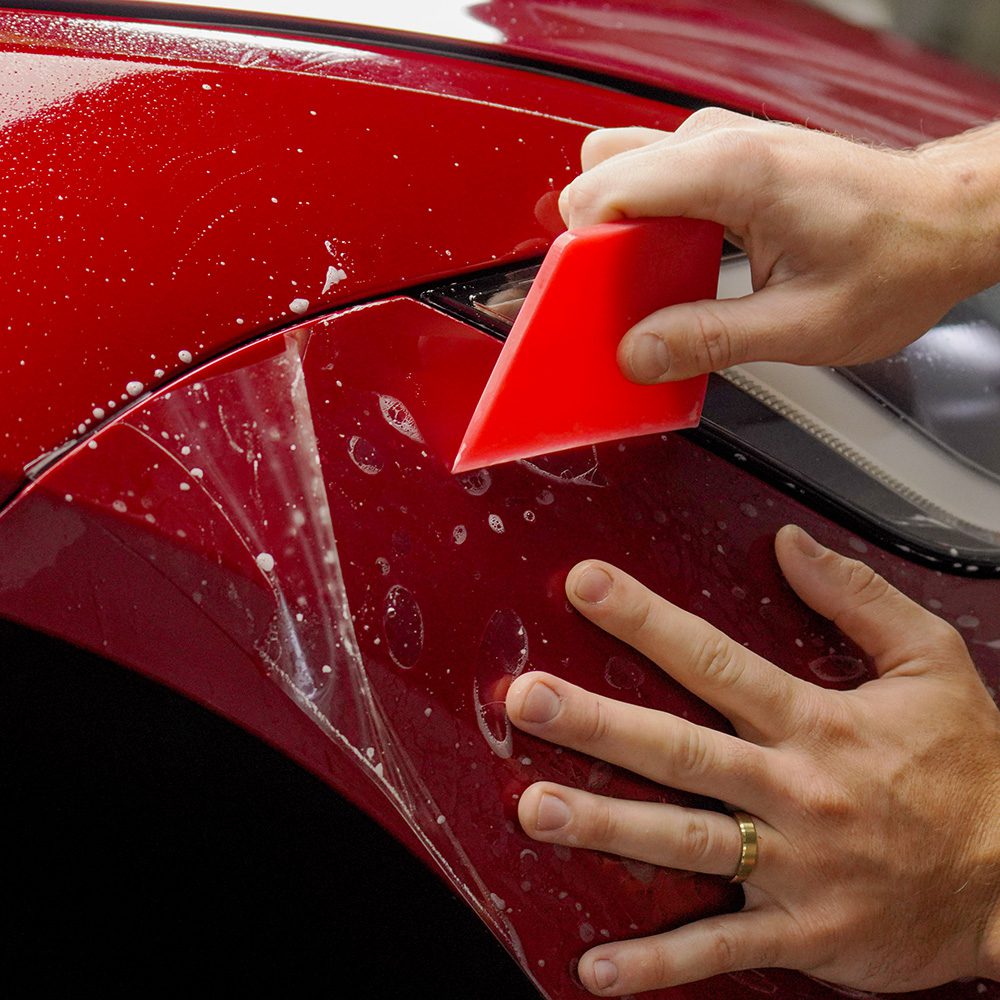
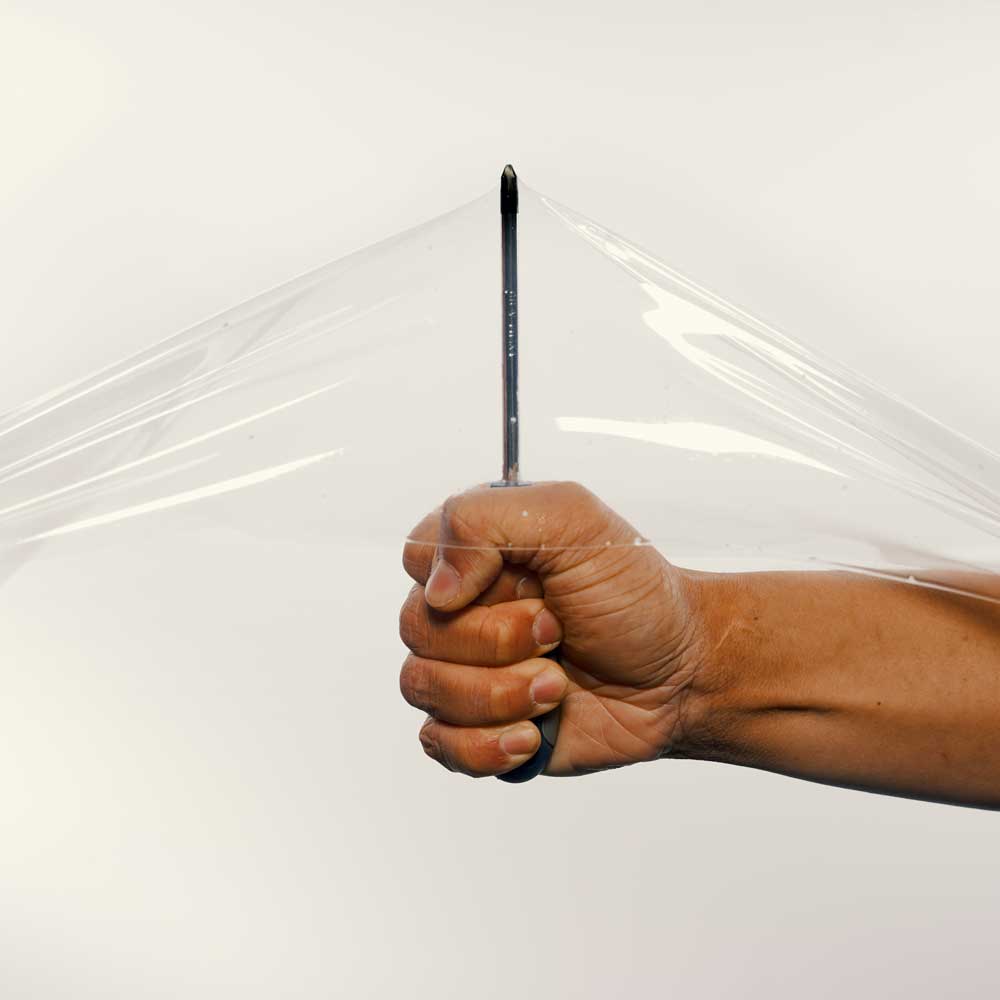
What Is PPF? Paint Protection Film is made from thermoplastic polyurethane (TPU).
It was originally developed to protect high-impact surfaces like helicopter blades and later NASCAR. Over time, it became standard for automotive protection.
PPF is typically:
- 8-12 mil thick
- Around 180–220 microns
That’s about double vinyl thickness.
Installation Process
PPF is usually a wet install.
Installers use:
- A slip solution (soapy water)
- A tack solution (often water + alcohol)
- Short, pushing motions to move water
Unlike vinyl, PPF requires more force. It’s thicker and more resistant.
Self-Healing Technology
This is the big advantage.
Scratches self-heal with heat.
Sun exposure alone can activate healing.
In scratch testing:
- Vinyl retains visible marks.
- PPF largely recovers.
This matters for:
- Rock chips
- Paint transfer
- Light abrasions
- Parking lot damage
PPF absorbs impact energy better than vinyl.
Finish Options
PPF comes in:
- Gloss
- Matte – aka “Stealth” or satin finishes
Matte PPF can completely transform the look of a gloss Tesla without repainting it.
Cost
Material cost:
- $1,200 to $1,400
Installed full-body:
- $5,000 to $7,500
- Higher in premium markets
Turnaround time:
- Around 7-10 days
If you love your factory color and want protection, this is the right choice.
Color PPF: Protection + Color in One
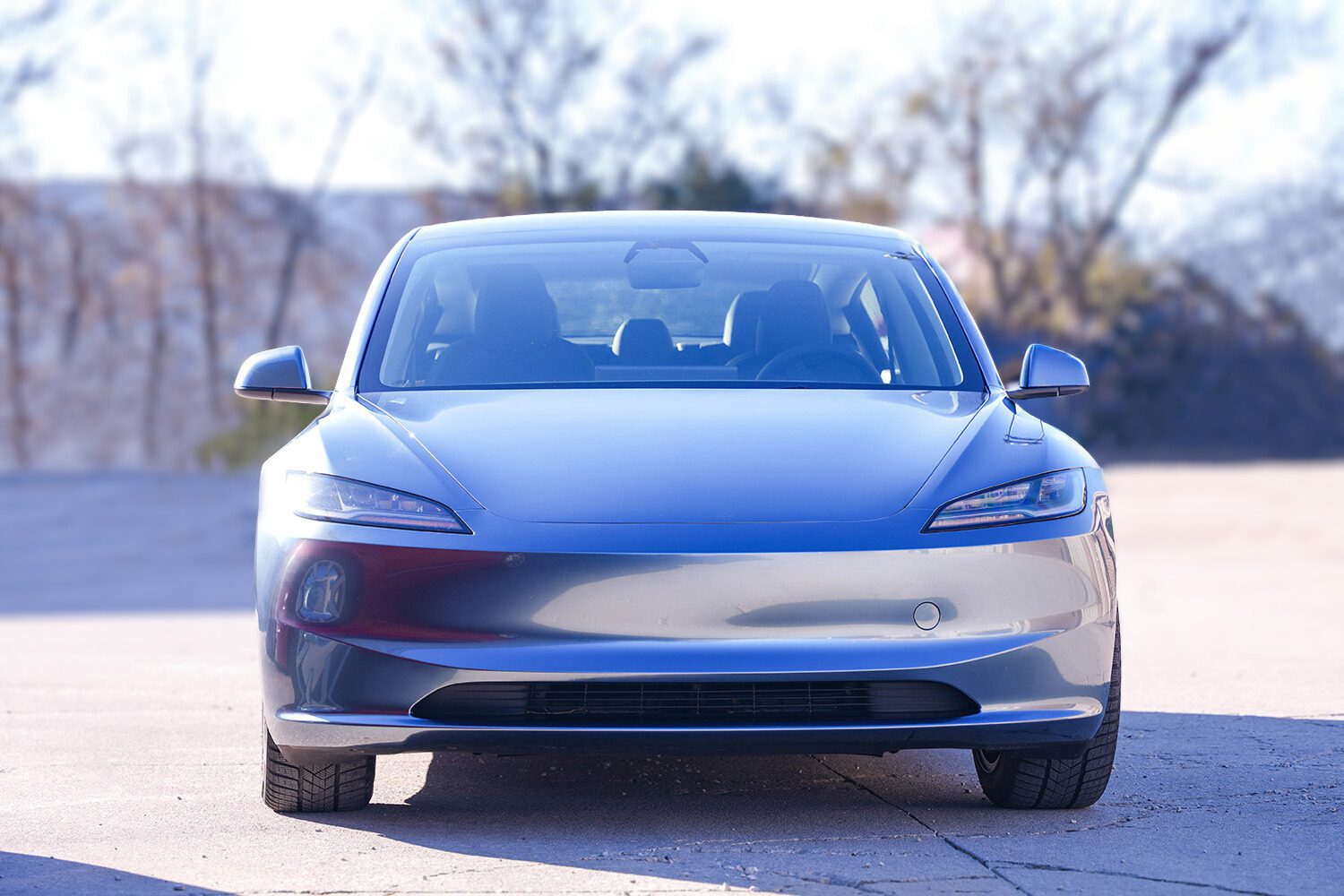

Color PPF has exploded in popularity in the last few years. At events like the SEMA Show, manufacturers from Asia have flooded the market with options. And they look incredible.
What Is Color PPF?
It’s essentially: If vinyl and PPF had a baby.
You get:
- Color change
- 8-10 mil protection
- Self-healing surface
Installation Types
Color PPF can be:
- Wet install (most common)
- Dry install (a few newer options like Avery Dennison Prism and 3M PWF)
It installs similarly to standard PPF but often requires more coverage precision to get that complete cover change.
If you’re going from red to green, every visible edge must be wrapped.
That adds labor.
Thickness
Measured with a coating gauge:
- PPF: ~200 microns
- Color PPF: ~190–200 microns
- Vinyl: ~100–110 microns
Color PPF provides nearly identical impact protection to standard PPF.
Durability
Like standard PPF, color PPF:
- Self-heals with heat
- Resists rock chips better than vinyl
It protects your paint while transforming your Tesla’s look.
The Biggest Con: Color Matching
This is important.
Traditional vinyl brands like Avery Dennison and 3M have highly consistent color reproduction.
Color PPF is harder to replicate exactly between production batches.
If you damage a panel 18 months later, matching the exact tone can be challenging.
Many professional shops:
- Buy two rolls from the same batch
- Track batch numbers carefully
It’s not a deal-breaker. But you should know it. And ask your installers how they would handle that situation.
Cost
Material cost:
- $1,300 to $2,000
Installed:
- $6,000 to $10,000
Turnaround:
- 7 to 10 days
It costs more than standard PPF because it requires more expensive material, more coverage and more removal work.
Side-by-Side Comparison
| Feature | Vinyl | PPF | Color PPF |
|---|---|---|---|
| Purpose | Color change | Protection | Color + Protection |
| Material | PVC | TPU | TPU |
| Thickness | ~100 microns | ~200 microns | ~200 microns |
| Self-healing | Minimal | Yes | Yes |
| Rock chip resistance | No | Strong | Strong |
| Full wrap cost | $3.5k–$6.5k | $5k–$7.5k | $6k–$10k |
| Color consistency | Excellent | N/A | Moderate |
Which One Is Right for You?
Choose Vinyl If:
- You only care about color change
- You like switching colors often
- Budget matters most
- Protection isn’t your priority
Pick PPF If:
- You love your factory color
- You want long-term protection
- You care about rock chips
- You plan to keep your Tesla
Go for Color PPF If:
- You want a new color
- You want real impact protection
- You don’t want to stack vinyl + PPF
- You’re okay with higher cost
Final Thoughts
Technology has improved dramatically in recent years.
Vinyl is easier than ever. PPF is more installer-friendly than ever. Color PPF is advancing fast.
There’s no wrong choice. There’s only the right fit for your goals.
If you’re looking to DIY protect your Tesla, that’s exactly what we focus on at DIY Wrap Club.
Protect and customize what matters to you.


