
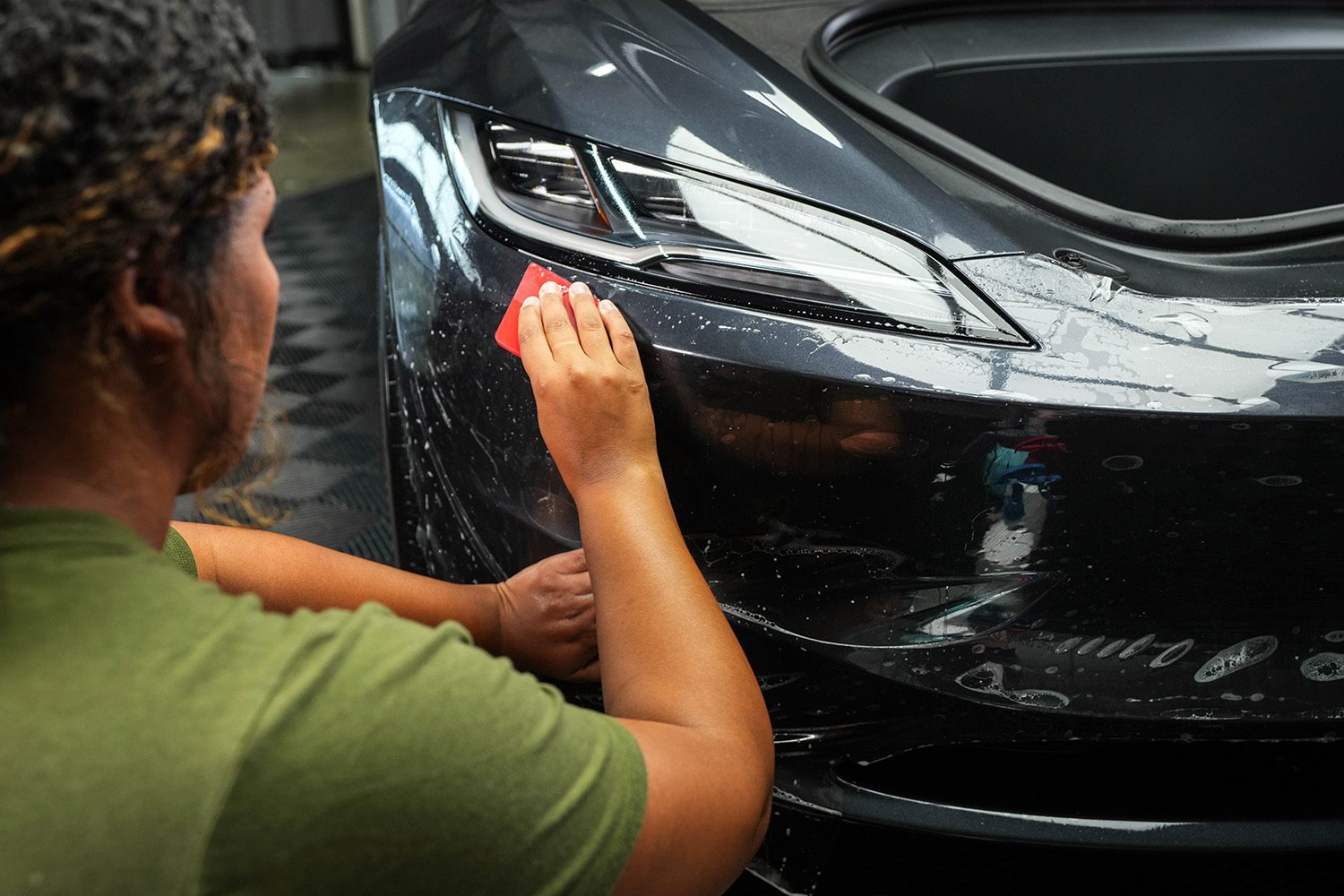
Installing a Model 3 Highland PPF kityourself might sound intimidating at first, but with the right prep, the right tools, and the right expectations, it is absolutely possible for a careful DIYer. Paint protection film, also called PPF, is one of the best ways to protect your Model 3 Highland from rock chips, road debris, bug splatter, light scratches, and daily driving wear.
The key is understanding that not every panel is the same difficulty. Installing PPF on a flat hood is very different from installing PPF on a curved front bumper. Rocker panels are different from mirrors. A full-body PPF kit is different from a front protection kit. That is why this guide breaks down the process step by step so you can decide what level of protection makes sense for your car and your comfort level.
Whether you are installing a Tesla Model 3 Highland front PPF kit, a rocker panel PPF kit, or a full-body PPF kit, this guide will walk you through the tools, prep, install process, common mistakes, and tips that make the job much easier.
Can You Install PPF on a Tesla Model 3 Highland Yourself?
Yes, you can install PPF on a Tesla Model 3 Highland yourself, especially if you are using a pre-cut PPF kit designed specifically for the 2024+ Model 3 Highland. A pre-cut kit removes one of the hardest parts of professional PPF installation: bulk cutting film on the vehicle.
With a DIY pre-cut paint protection film kit, the film is already shaped for the specific panels of your Tesla. That means you don’t need to trim large pieces of film directly on your paint. Instead, your main job is to prep the surface, position the film correctly, use the right slip and tack solutions, squeegee out moisture, and finish the edges.
That said, some panels are much more beginner-friendly than others. If this is your first time installing PPF, do not start with the front bumper. Start with an easier section like door sills, rocker panels, or even a hood, which is a flatter panel to get comfortable with how the film moves.
A good DIY PPF install is not about rushing. It is about patience, clean prep, and knowing when to use slip solution versus tack solution.
Why Install PPF on a Tesla Model 3 Highland?
The Tesla Model 3 Highland has a clean, refreshed front end and smooth body lines, but like any daily-driven vehicle, it is still exposed to road damage. The highest-impact areas are usually the front kit (bumper, hood, fenders, headlights, mirrors) as well as the rocker panels and rear impact areas.
PPF helps protect these areas from:
- Rock chips
- Road debris
- Bug stains
- Light scratches
- Swirl marks
- Salt and winter grime
- Sandblasting on rocker panels
- Loading damage near the trunk
For many Model 3 Highland owners, the best starting point is a front PPF kit or a front kit plus rocker panel PPF. If you want maximum protection or a stealth/matte look, a full-body PPF kit for the Model 3 Highland may make more sense.
What You Need Before Installing PPF
Before you install paint protection film on your Tesla Model 3 Highland, make sure you have the right tools and a clean install environment. PPF installation is much easier when you are prepared before the film ever touches the vehicle.
The good news is that DIY Wrap Club’s PPF kits come with everything you need to install. We don’t just provide the pre-cut film, we give all the tools and solutions needed to get the job done with success. Plus, we have in-depth courses that walk you through the entire process.
Basic PPF Installation Tools
You will need:
- Pre-cut Model 3 Highland PPF kit
- Slip solution
- Tack solution
- Two clean spray bottles
- PPF squeegees
- Soft microfiber towels
- Nitrile gloves preferred
- Clay bar
- Car wash shampoo
- Clean water, preferably distilled or filtered
- Good lighting
A heat gun can help relax fingers or stubborn edges, but too much heat can distort film. If you are new to DIY PPF installation, use heat sparingly.
Best Temperature for DIY PPF Installation
The ideal temperature for installing PPF is usually around 65°F to 75°F. If the garage is too cold, the film becomes stiff and harder to stretch or conform. If the garage is too hot, the film can become overly soft, tack too quickly, or dry out before you are ready.
Avoid installing PPF:
- In direct sunlight
- On hot paint
- In a dusty driveway
- On a windy day
- In a garage where the vehicle was just driven and the panels are still hot
- In temperatures that are too cold for the film to move properly
A clean garage with good lighting is the best place to install a Tesla Model 3 Highland PPF kit yourself.
Slip Solution vs Tack Solution: What Is the Difference?
One of the most important parts of learning how to install PPF is understanding the difference between slip solution and tack solution.
Slip Solution
Slip solution helps the film float on the paint so you can position it correctly before it locks down. It gives you time to line up edges, badges, sensors, headlights, and panel gaps.
A simple starting point for slip solution is:
1,000 ml water + about 5 ml clear dish soap or baby shampoo
Do not overdo the soap. Too much soap can make the film difficult to anchor and may cause edges to keep lifting.
Tack Solution
Tack solution helps the adhesive grab the paint when you are ready to lock an area into place. It is usually used for anchor points, edges, curves, corners, and high-tension areas.
A simple starting point for tack solution is:
800 ml water + 200 ml 70% isopropyl alcohol
The tack solution should be used strategically. If you spray tack solution everywhere too early, the film can grab before it is aligned. That is one of the most common DIY PPF mistakes.
Step 1: Wash the Model 3 Highland Thoroughly
The first step in any Tesla Model 3 Highland PPF installation is a proper wash. Dirt, dust, wax, road film, and bug residue can all interfere with adhesion. If contamination gets trapped under the film, it will show.
Wash the vehicle carefully using a clean wash mitt and automotive soap.
Do not forget the edges. Many PPF failures happen because the visible surface was cleaned, but the edges were still dirty.
After washing, use a clay bar to remove bonded contaminants. Even a new Tesla can have rail dust, road grime, adhesive residue, or rough contamination on the paint.
Anything left on the paint can become visible once the film is installed.
Focus especially on high-impact areas like the front bumper, hood, fenders, and rocker panels.
After claying, rinse or wipe the panel again so the surface is clean.
Step 2: Inspect the Paint Before Installing PPF
Before installing paint protection film, inspect the panel under good lighting. PPF protects paint, but it does not magically repair damage underneath.
Look for:
- Rock chips
- Scratches
- Stains
- Dirt nibs
- Raised touch-up paint
- Adhesive residue
- Bug etching
- Water spots
If your Model 3 Highland already has rock chips, you can still install PPF, but the chips may remain visible under the film. If the chip bothers you, touch it up before installing the film and allow the touch-up paint to cure properly.
Step 3: Choose the Right Install Order
Start with easier panels before moving to harder ones. This helps you learn how the film behaves before attempting complex curves.
A beginner-friendly install order could look like this:
- Trunk ledge or rear impact area
- Rocker panels
- Hood
- Fenders
- Headlights
- Mirrors
- Front bumper
- Full-body panels
The front bumper is usually one of the hardest areas because it has curves, corners, tension, and multiple body lines. Save it for later in the install if you are doing a full or front kit.
Our DIY Wrap Club courses are in order of what we think makes the most sense for DIYers new to PPF. Everything is designed for beginners in mind.
Model 3 Highland PPF Difficulty Ranking
Not every PPF panel is equally difficult. Here is a practical difficulty ranking for DIYers.
Easy: Door Sills and Trunk Ledge
These are great first projects. They are small, low-risk, and help protect areas that see daily wear.
Best for:
- First-time DIYers
- Lease protection
- Preventing shoe scuffs
- Protecting cargo loading areas
Easy to Moderate: Rocker Panels
Rocker panel PPF is one of the best value upgrades for a Tesla Model 3 Highland. These lower panels take a lot of abuse from road debris, sand, salt, and tire sling.
Best for:
- Daily drivers
- Winter states
- Gravel roads
- Owners who want affordable protection
Moderate: Hood
The hood is large but relatively flat, which makes it more approachable than a bumper. The challenge is keeping the film clean and aligned while working with a larger piece.
Best for:
- DIYers with patience
- Two-person installs
- Front-end protection
Moderate: Fenders
Fenders are smaller than the hood but have curves and edges that require careful alignment.
Best for:
- Front protection kit installs
- Building confidence before the bumper
Moderate to Hard: Mirrors
Mirrors are small but curved. Small does not always mean easy. Mirror PPF often requires careful stretching, patience, and edge control.
Best for:
- Intermediate DIYers
- Owners who want complete front-end coverage
Hard: Front Bumper
The Model 3 Highland front bumper is usually the most challenging panel in a front PPF kit. It has curves, recessed areas, corners, and multiple alignment points.
Best for:
- Patient DIYers
- Two-person installs
- Owners who have already practiced on easier panels
Hard to Advanced: Full-Body PPF
A full-body PPF install gives the most complete protection, but it also requires the most time and patience. It is doable for the right DIYer, but it should be treated as a multi-day project.
Best for:
- Long-term owners
- Matte/stealth or color change finish
- Maximum paint protection
- Two-person installs
Step 4: Prepare the Film and Panel
Before peeling the liner, spray your hands or gloves with slip solution. This helps prevent fingerprints from getting into the adhesive.
Then spray the panel generously with slip solution. When you peel the liner from the PPF, spray the adhesive side as you go. Do not let the adhesive side touch the ground, your clothes, or a dirty surface.
For larger panels like the hood or bumper, having a second person makes the install much easier. One person can hold the film while the other removes the liner and sprays the adhesive.
Step 5: Float the PPF Into Position
Place the wet film onto the wet panel and let it float. This is where slip solution does its job.
Do not immediately force the film down. Take your time and align the edges, corners, cutouts, and body lines. On a Tesla Model 3 Highland, alignment matters around headlights, badges, bumper edges, parking sensors, and panel gaps.
The goal is to get the film sitting naturally in position before you start locking it down.
If the film feels like it is grabbing too early, you may need more slip solution. If it will not tack at all, you may have too much soap or need tack solution in the anchor area.
Step 6: Set Your Anchor Points
Once the film is aligned, use tack solution to lock down one or two anchor points. Anchor points keep the film from moving while you squeegee the rest of the panel.
For example:
- On a hood, you may anchor near the center and work outward.
- On a rocker panel, you may anchor one end and work across.
- On a bumper, you may anchor the center first, then work toward the corners.
- On mirrors, you may anchor the flattest area first, then work into the curves.
The exact anchor points can vary by kit and panel, so always follow the specific install video or instructions for the piece you are installing.
Step 7: Squeegee From the Center Out
After the film is aligned and anchored, start pushing the solution out from under the PPF. Use firm, overlapping squeegee strokes.
Do not lightly wipe the surface. You need enough pressure to move the moisture out from under the film.
Good squeegee technique:
- Keep the squeegee wet so it glides
- Use overlapping strokes
- Push solution toward the nearest edge
- Avoid trapping water in the middle
- Keep your angle consistent
- Do not drag a dry squeegee across the film
- Re-wet the top surface as needed
If you see a bubble forming, stop and correct it before continuing. Many bubbles happen when a squeegee stroke accidentally closes off the escape path for the solution.
Step 8: Work Edges and Corners Last
Edges and corners are where many DIY PPF installs succeed or fail. Do not rush them.
Before wrapping or finishing an edge, make sure the main surface is fully squeegeed and aligned. Then use a towel to absorb excess moisture near the edge. If needed, use tack solution to help the adhesive lock down.
For stubborn edges or fingers, light heat can help relax the film. Be careful. Too much heat can stretch, distort, or damage the film.
The goal is not to force the film into place. The goal is to relax the film, remove excess moisture, and let the adhesive bond correctly.
Step 9: Inspect the Panel After Installation
Once the panel is installed, inspect it from multiple angles. Look for:
- Large trapped bubbles
- Dry air pockets
- Lifted edges
- Fingers
- Misalignment
- Dirt under the film
- Excess moisture at corners
- Areas that were missed with the squeegee
Small moisture pockets can be normal after a PPF install and may evaporate over time. Dry air bubbles are different and usually do not disappear on their own.
If you catch an issue early, it is usually easier to lift the film carefully, add slip solution, reposition, and squeegee again.
Wet Bubbles vs Dry Bubbles
Not all bubbles are the same.
Wet Bubbles
Wet bubbles contain moisture or slip solution. Small wet bubbles can often improve as the film cures. Depending on size and location, some moisture may dissipate over several days.
Dry Bubbles
Dry bubbles are trapped air pockets. These usually do not disappear on their own. If you notice dry bubbles during the install, it is better to correct them immediately by lifting the film carefully, adding solution, and re-squeegeeing the area.
Check out the video above for demonstrations on how to get rid of bubbles during and after an install.
Common DIY PPF Mistakes to Avoid
Installing PPF on a Tesla Model 3 Highland yourself is much easier when you avoid the most common beginner mistakes.
Mistake 1: Not Cleaning the Edges
The face of the panel may look clean, but the edges often hold dirt, wax, and road grime. Dirty edges can cause lifting.
Mistake 2: Using Too Much Soap
Slip solution is important, but too much soap can prevent the film from anchoring. Start with a light mixture and adjust only if needed.
Mistake 3: Using Tack Solution Too Early
Tack solution should be used when you are ready to lock the film in place. If you use it too early, the film can grab before it is properly aligned.
Mistake 4: Starting With the Front Bumper
The front bumper is one of the hardest panels. If you are a beginner, start with easier pieces first.
Mistake 5: Installing in Direct Sunlight
Direct sunlight can make the panel too hot and cause the solution to dry too quickly.
Mistake 6: Letting the Adhesive Touch Dirt
Once dirt gets on the adhesive side of the film, it is hard to remove completely. Keep everything wet and clean.
Mistake 7: Rushing the Edges
Edges need time, pressure, and clean prep. If edges are wet, dirty, or under too much tension, they may lift.
Mistake 8: Installing Over Ceramic Coating
Ceramic coating can reduce adhesion. PPF should be installed before ceramic coating.
How Long Does It Take to Install PPF on a Model 3 Highland?
Install time depends on the kit, the panel, and your experience level.
Approximate DIY install times:
| PPF Area | Estimated DIY Time |
|---|---|
| Door sills | 20–45 minutes |
| Trunk ledge | 30–60 minutes |
| Rocker panels | 1–2 hours |
| Hood | 1–2 hours |
| Fenders | 1–2 hours |
| Mirrors | 1–2 hours |
| Front bumper | 2–3 hours |
| Full front kit | 6–10+ hours |
| Full-body PPF kit | 2–3+ days |
If this is your first DIY PPF installation, give yourself more time than you think you need. A slow, clean install is better than rushing and having to redo a panel.
Should You Install the Front Kit, Rockers, or Full Body PPF?
The best Tesla Model 3 Highland PPF kit depends on how you drive and what you want to protect.
Choose a Front PPF Kit If:
You want to protect the most visible impact areas, including the front bumper, hood, fenders, mirrors, and headlights. This is usually the best value for daily drivers.
Choose Full-Body PPF If:
You want maximum protection or want to preserve the entire car long-term. Full-body PPF is also the best option if you want a full matte or stealth look.
Choose Rocker Panel PPF If:
You want affordable protection for one of the highest-wear areas. Rockers are especially important if you drive in rain, snow, salt, gravel, or construction zones. These are a great add on to a front PPF kit.
Choose Smaller PPF Kits If:
You are new to DIY and want to start with easier protection areas like door sills, trunk ledge, door handles, b pillar, or mini rocker coverage.
Can You Install PPF Over Rock Chips?
Yes, you can install PPF over rock chips, but the film will not hide them completely. PPF is designed to protect paint, not repair it.
If your Model 3 Highland already has chips, you have a few options:
- Leave the chips as-is and install PPF to prevent more damage
- Use touch-up paint before installing PPF
- Have the panel professionally repaired before installing film
- Replace or repaint a heavily damaged bumper before protecting it
If you use touch-up paint, make sure it has enough time to cure before applying PPF over it. Installing film over uncured paint can cause problems later when removing the film.
Can You Install PPF Over Ceramic Coating?
It is not recommended to install PPF over ceramic coating. Ceramic coatings are designed to make surfaces slick and hydrophobic, which can make it harder for paint protection film to bond properly.
The better order is:
- Wash the vehicle
- Decontaminate the paint
- Polish or correct paint if needed
- Install PPF
- Let the PPF cure
- Apply ceramic coating over the PPF if desired
Ceramic coating over PPF can make cleaning maintenance easier, but ceramic coating under PPF can create adhesion issues.
What to Do After Installing PPF
After installing PPF on your Tesla Model 3 Highland, give the film time to cure. During the first few days, the adhesive is still settling and moisture may still be evaporating.
After installation:
- Wait 7 days before washing the car
- Avoid pressure washing edges
- Avoid picking at small moisture pockets
- Keep an eye on edges and corners
- Park indoors if possible
- Do not use harsh chemicals
Small moisture bubbles may improve as the film cures. If you notice an edge lifting, address it early before dirt gets underneath.
How to Maintain PPF on a Tesla Model 3 Highland
Maintaining PPF is simple if you treat it properly.
Use:
- pH-neutral car soap
- Soft microfiber towels
- Safe drying towels
- Gentle detail sprays approved for film
Avoid:
- Harsh solvents
- Abrasive compounds
- Automatic car washes
- Pressure washer nozzles sprayed directly into edges
- Picking at the film
- Aggressive polishing
PPF is durable, but it still needs proper care. The cleaner you keep the film, especially around edges, the better it will look over time.
Is DIY PPF Worth It for the Tesla Model 3 Highland?
For many owners, DIY PPF is worth it because it gives you real protection without paying full professional installation pricing. A pre-cut DIY PPF kit allows you to protect the highest-impact areas of your Model 3 Highland at home, especially if you are patient and willing to learn.
DIY PPF makes the most sense if:
- You enjoy working on your car
- You want to save money
- You are okay taking your time
- You have a clean place to install
A professional install may still make sense if you want a fully wrapped, nearly invisible, show-level finish and do not want to do the work yourself. But for many Tesla owners, a well-designed pre-cut PPF kit is a practical way to protect the car without turning it into a complicated shop project.
Final Thoughts: Take Your Time and Start With the Right Kit
Learning how to install PPF on a Tesla Model 3 Highland yourself is mostly about preparation, patience, and choosing the right kit. The film itself is only one part of the process. The real difference comes from clean prep, good lighting, the correct slip and tack solution, smart panel order, and not rushing the edges.
If you are brand new to DIY paint protection film, start with a smaller kit or a simpler panel. But if you are comfortable with detailed projects, a front PPF kit is a great way to protect the most vulnerable areas of your Model 3 Highland. If you want the highest level of protection, a full-body PPF kit gives you the most complete coverage.
The biggest thing to remember is this: PPF installation does not have to be perfect in the first five minutes. The film is designed to be installed wet, adjusted, positioned, and worked into place. Stay patient, keep everything clean, and let the process work.
Your Tesla Model 3 Highland will thank you every time a rock chip hits the film instead of the paint.
FAQ: Tesla Model 3 Highland DIY PPF Installation
Can I install PPF on a Tesla Model 3 Highland myself?
Yes. With a pre-cut PPF kit, the right tools, and a clean install environment, many DIYers can install PPF on a Tesla Model 3 Highland themselves. Start with easier panels like door sills, rockers, or the hood before attempting the front bumper.
What is the hardest part of installing PPF on a Model 3 Highland?
The front bumper is usually the hardest part because it has curves, corners, sensors, recessed areas, and multiple alignment points. Mirrors can also be tricky because they are small but very curved.
What is the easiest PPF to install on a Model 3 Highland?
Door sills, trunk ledge protection, mini rockers, headlights, and door handles are usually the easiest areas to install. These are great starting points for first-time DIYers.
How long does DIY PPF take on a Tesla Model 3 Highland?
A small kit may take less than an hour, rocker panels may take 1–2 hours, a full front PPF kit may take 6–10+ hours for a beginner, and a full-body PPF kit may take 2–3+ days.
Do I need a heat gun to install PPF?
A heat gun can help with stubborn fingers, curves, and edges, but it should be used carefully. Too much heat can distort or damage the film. Many beginner-friendly panels can be installed with little to no heat.
Can I install PPF over ceramic coating?
It is not recommended. Ceramic coating can make the surface too slick and reduce PPF adhesion. The better order is to install PPF first, let it cure, and then apply ceramic coating over the film.
Can I install PPF over rock chips?
Yes, but PPF will not hide rock chips completely. It will protect the area from future damage, but existing chips may still be visible under the film.
What solution do you use to install PPF?
Most DIY PPF installs use a slip solution and a tack solution. Slip solution helps position the film. Tack solution helps lock the film down. A common starting point is 1,000 ml water with about 5 ml soap for slip, and 800 ml water with 200 ml 70% isopropyl alcohol for tack.
Should I install front PPF or full-body PPF?
A front PPF kit is usually the best value for daily drivers because it protects the highest-impact areas. Full-body PPF is best if you want maximum protection, long-term preservation, or a full matte/stealth look.
How soon can I wash my car after installing PPF?
Give the film about 7 days to cure before washing. Hand washing is recommended. Avoid pressure washing into edges, harsh chemicals, or automatic brush car washes. Follow the specific care instructions for your PPF kit.


