

A perfect wrap does not happen because nothing ever goes wrong. A great wrap happens because the installer knows where problems can show up, checks the work carefully, and fixes small issues before they become bigger ones.
That is exactly why we like doing a two-week check-in after a full wrap or PPF install.
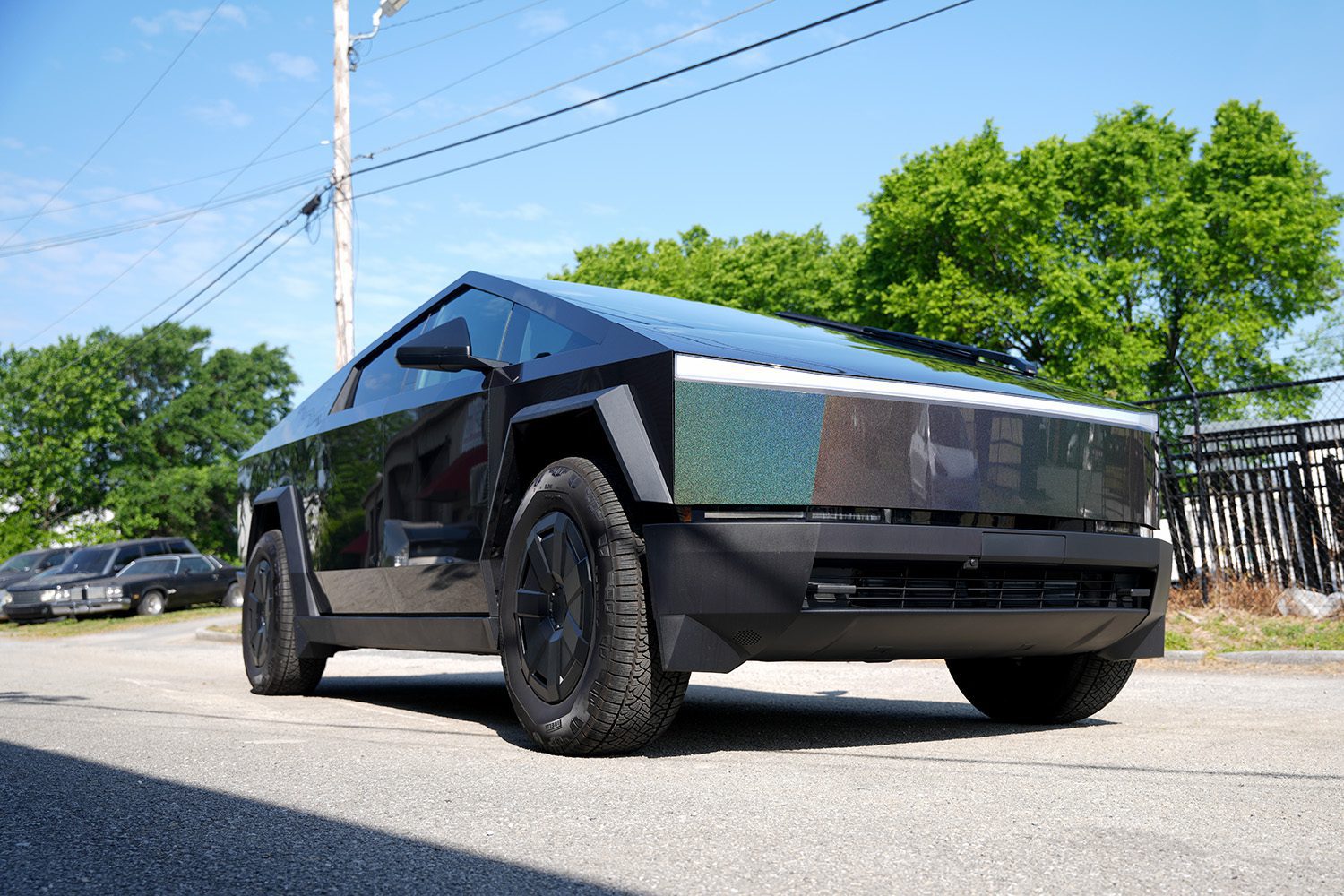
We recently wrapped a Cybertruck in our Boring PPF, and the finished result looked incredible. This film has a gloss finish with metallic flakes that give it a prism-like effect. Depending on the angle and lighting, you can see a subtle rainbow halo in the finish, which makes the stainless Cybertruck body look completely different.
But even when a wrap turns out awesome, there can still be a few small areas that need attention after the film has had time to settle. That is what this check-in is for.

Why a two-week check-in matters
A two-week check-in is common in professional wrap shops, and in our opinion, it is one of the best ways to make sure the job holds up long-term.
No matter how skilled the installer is, vinyl and PPF can react differently once the vehicle leaves the shop. Temperature changes, moisture, panel gaps, body lines, and normal driving can all reveal areas that need a little extra attention.
The goal is not to wait for a customer to find a problem and worry about it. The goal is to educate them upfront.
We like to tell customers that small bubbles, minor lifting, or edge issues can happen after install, especially on a vehicle like the Cybertruck. Instead of making that feel like a problem, we schedule a follow-up check-in. During that visit, we inspect the whole vehicle, fix anything that needs fixing, wash the car, and make sure it leaves in great shape.
It gives the customer peace of mind, and it gives us one more chance to make sure every edge is holding the way it should.
The high-risk areas on a Cybertruck wrap
The Cybertruck is not like most vehicles. The stainless body, sharp body lines, panel gaps, and trim areas create unique challenges for vinyl and PPF installation.
During this check-in, most of the wrap looked great. Many of the edges were holding perfectly with no lifting at all. But there were a few areas we wanted to clean up.
One common area is where the fender and pillar meet. On Cybertrucks, there can be a lot of variation from truck to truck. Some have a very tight gap. Others may have a small 2 to 3 mm gap. That difference affects how much material can tuck or wrap around the edge.
On earlier Cybertrucks, some trim areas could be loosened to make wrapping easier. But as Tesla has changed certain parts and bolting methods, that process has changed too. In many cases, the safer option is to bring the film right to the edge instead of forcing it around a tight or inconsistent gap.
That is one area where we found slight lifting. It was not major, but it needed to be trimmed, cleaned, and heat-set properly.
Another area we checked closely was the trunk and lower rear quarter panel. The bottom trunk edge can be tricky because water naturally flows through that area. Anywhere that holds moisture deserves extra attention. Moisture can make an edge more likely to lift if it is not trimmed and sealed correctly.
The rear quarter panel also had one side that behaved differently than the other. That is another reality of wrap work. One side of the vehicle can be perfectly fine, while the other side needs extra cleanup because the body line, gap, or surface shape is slightly different.
Small fixes now prevent bigger issues later
Most of what we found was minor. A tiny edge starting to lift. A corner that needed more heat. A small sliver of film sitting too close to a seal. None of these were major failures, but they were worth fixing.
That is the whole point of a follow-up inspection.
When film overlaps a seal or sits in an area that traps moisture, it can create problems later. That is why trimming excess film is important. The goal is to remove the material that could eventually lift, while being extremely careful not to cut into the rubber seal or the vehicle.
This is also where professional experience matters. Cutting film near seals, trim, and tight panel gaps is not something beginners should rush. The sound, pressure, angle, and blade control all matter. You want to cut the film, not the seal.
Once the excess is removed, the edge can be heated and pressed down so it holds better.
A useful trick for hard-to-reach edges
One of the tools we used during this check-in was a small metal spudger tool. These are often used for electronics repair, but they can be very helpful for PPF edges in tight areas.
The idea is simple. Heat the metal tool, then use it to press the film into a hard-to-reach edge or corner.
This is especially useful around the Cybertruck pillar area, where it can be difficult to get a torch or squeegee into the exact spot you need. There are brackets, rubber pieces, and tight angles that make normal tools harder to use.
By heating a small metal tool and carefully pressing the edge, you can apply focused heat and pressure exactly where it is needed. It works almost like a tiny heated spatula.
This is not something you want to do carelessly. Too much heat can damage film, trim, or nearby materials. But when done carefully, it can be a great way to lock down edges in tight areas.
Final inspection after the repairs
After fixing the small areas, we do a final inspection by hand and by sight.
That means looking down the entire edge line, checking the pillar, opening doors, running fingers along high-risk areas, and making sure nothing feels loose.
The Cybertruck doors on this wrap held really well. The edges were fully wrapped around, and the relief cuts were intact. Nothing was lifting on the door areas, which was a great sign.
The pillar area, lower edges, trunk edge, and rear quarter areas got the most attention because those are higher-risk sections on this vehicle.
Once everything looked and felt good, the next step was washing the car.
Why we wash the car after the check-in
The wash is partly for the customer, but it is also part of our inspection process.
When we foam cannon and wash the vehicle, we get another chance to test the areas we just worked on. If an edge cannot handle a careful wash after being fixed, we want to know before the customer gets the vehicle back.
The wash also helps us see the surface better. Water movement, hydrophobic behavior, and reflections can reveal small areas that may need another look.
After the wash, we clean up the interior, vacuum the car, and make sure the customer gets the vehicle back looking better than when it arrived.
Wrap shops should show the real process
One of the biggest takeaways from this check-in is that wrap work is not about pretending nothing ever goes wrong.
Film installation is a craft. PPF and vinyl need time to settle. Some edges need to be revisited. Some body lines are more difficult than others. The Cybertruck, in particular, has several areas that require extra attention because of its stainless panels, tight gaps, and unusual construction.
A good installer does not hide that. A good installer plans for it.
That is why we recommend a follow-up inspection after a full wrap or PPF job. It helps catch small issues early, gives the customer confidence, and makes the final result stronger.
For DIY installers, the lesson is the same. After you finish an install, do not just walk away and assume everything is done forever. Check your edges. Look at high-risk corners. Pay attention to moisture-prone areas. Reinspect after a few days. If something needs to be cleaned up, fix it before it becomes a bigger issue.
That is how you get a wrap that looks good on day one and keeps looking good long after the install.
You can always reach out to us with any questions about this inspection process, and we’d be happy to help! Or ask us in the comments section of the YouTube video at the top of this article.


