
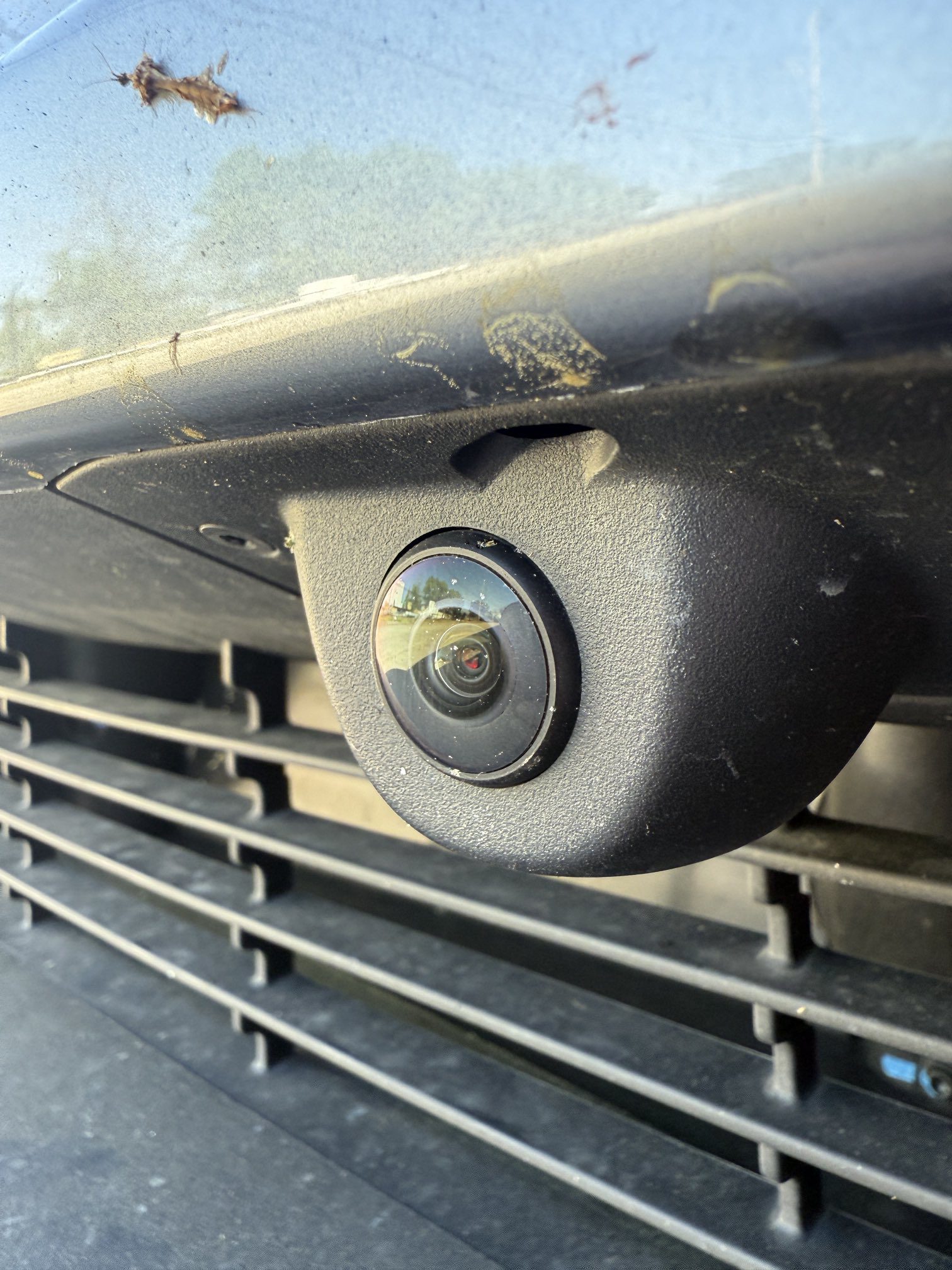
If you drive a newer Tesla, especially models equipped with Hardware 4, there’s one small detail that’s doing a lot of heavy lifting…
Your front camera.
And ironically, it’s also one of the most exposed, vulnerable parts of the entire vehicle.
The Problem We Kept Seeing
It started the same way most of our products do…
Customers kept bringing up the same issue.
They were noticing tiny rock chips, pitting, and even cracks on the front camera lens after normal driving. And once you look closely, it’s hard to unsee.
That camera sits low, right in the impact zone, constantly taking hits from:
- Road debris
- Small rocks kicked up at highway speeds
- Dust, sand, and grime
- Daily wear you don’t even think about
Even light damage adds up over time. And since that camera feeds into Tesla’s driver assistance systems like FSD, it’s not something you want compromised.
As we saw firsthand during testing, it doesn’t take long for chips to start forming on the lens surface.
Why Existing Solutions Weren’t Cutting It
Naturally, we looked at what was already out there.
Some people were using generic lens covers or plastic protectors. On paper, it sounds like a good idea.
In reality, not so much.
Here’s what we found:
- Poor fit due to curvature mismatch
- Weak adhesive that fails over time
- Gaps between the protector and lens → condensation issues
- Reduced clarity depending on thickness and spacing
Bottom line:
Most solutions either didn’t last… or made the camera worse.
That wasn’t going to fly.
The “Wait… Why Not PPF?” Moment
Then it clicked.
Paint Protection Film (PPF) is literally designed to absorb impact from debris. It’s flexible, optically clear, and self-healing.
So the question became:
Why not apply PPF directly to the camera lens?
That kicked off a full R&D process.
The Challenges We Had to Solve
This wasn’t as simple as cutting a circle and calling it a day.
The front camera is:
- Extremely small
- Highly curved
- Sensitive to any distortion or haze
- Easy to contaminate during install (fingerprints = instant failure)
We ran into a few key challenges:
1. Clarity
PPF works great on paint… but a camera lens is unforgiving.
Any:
- trapped air
- oils
- uneven pressure
…can create haze or distortion.
So we had to dial in perfect optical clarity.
2. Installation Method
Traditional wet install? Harder with the curve and size of the lens.
Dry install? Better control, but higher risk of contamination.
We tested both and refined the process to make it:
- Repeatable
- Beginner-friendly
- Clean install every time
3. Handling Something This Small
Trying to install a tiny circle of film directly with your fingers?
Yeah… not happening cleanly.
So we engineered a solution using:
- Precision kiss-cut film
- Transfer tabs for alignment
- A guided “center-out” install method
This lets you place it accurately without touching the adhesive surface.
Game changer.
The Final Product
What we ended up with is simple in concept, but dialed in where it matters:
- Ultra-clear PPF designed for impact absorption
- Precision cut specifically for Tesla front cameras
- Tab-assisted install for accuracy and ease
- Multiple pieces included so you can retry if needed
It’s not over-engineered. It just works.
What It Actually Protects Against
Let’s be clear. This isn’t a bulletproof shield.
If a massive rock hits your camera at high speed, nothing’s saving it.
But for real-world driving, this is exactly what you need.
It helps protect against:
- Micro chips
- Sandblasting effect over time
- Light debris impacts
- Surface wear that builds up invisibly
PPF is designed to absorb and disperse impact energy, which is exactly what your camera needs sitting in that position. It also has a hydrophobic surface layer, making it easier to clean and keep clean.
Why This Matters More Than You Think
That front camera isn’t just another sensor.
It plays a role in:
- Forward visibility for driver assistance
- Object detection
- Road condition awareness
- Future Full Self-Driving improvements
Keeping it clean and undamaged = better long-term performance.
And replacing that camera?
Way more expensive than protecting it.
The Bottom Line
Your front camera sits in one of the harshest environments on your car.
It takes hits every single time you drive.
And until now, there wasn’t a great solution.
Small part. Big impact.


