
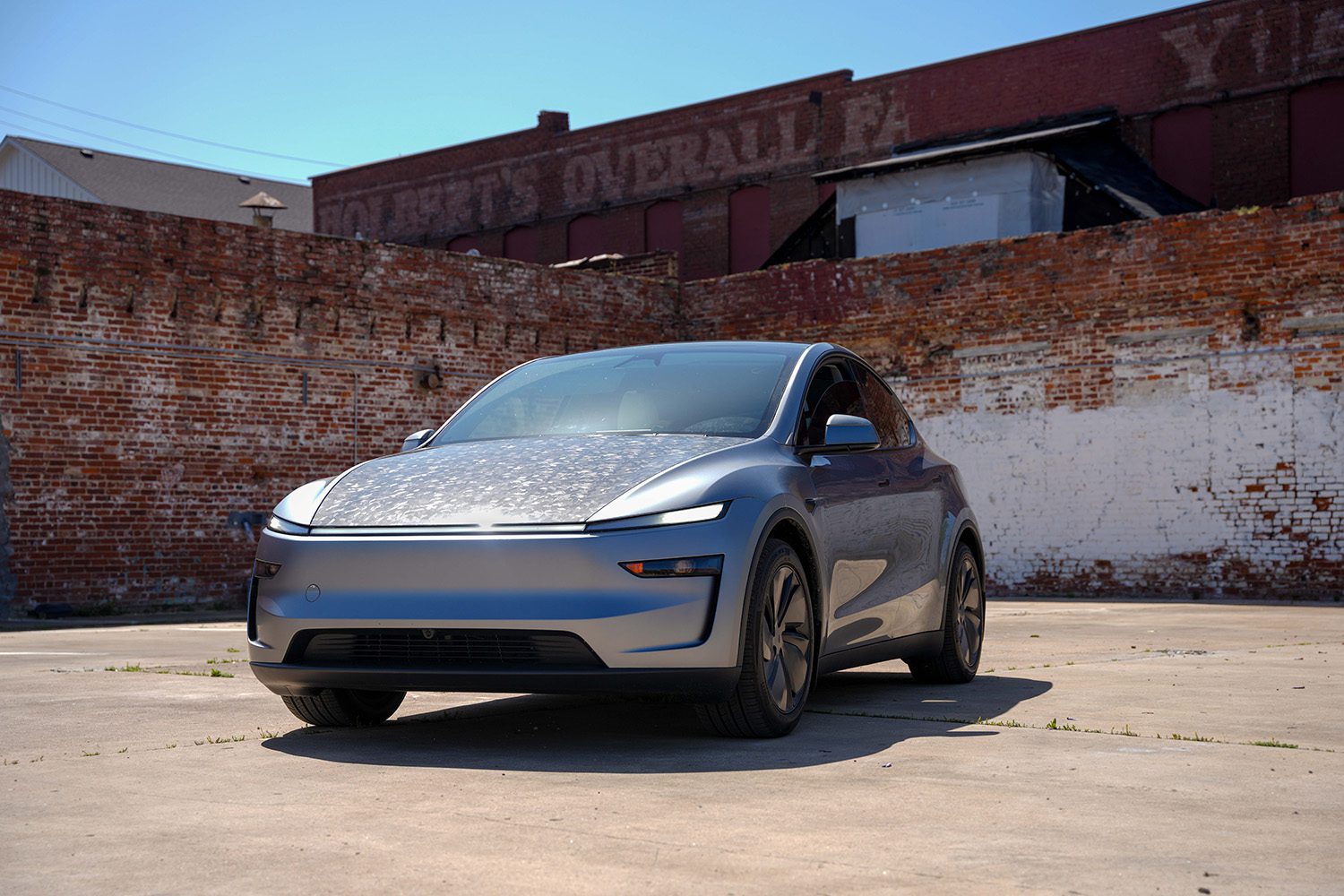
This Tesla Model Y Juniper review covers what ownership has really been like after one full year and 13,000 miles. From charging costs and maintenance to Full Self Driving, paint protection, and daily usability, here’s our honest experience living with the Model Y Juniper and whether we’d buy it again.
After more than a year and 13,000 miles with the Tesla Model Y Juniper Launch Edition, the answer is surprisingly simple: yes, we’d absolutely buy it again.
But there’s a lot more nuance behind that answer.
We’ve owned multiple Teslas over the years, including a 2020 Model Y, a 2022 Model Y, and a 2026 Model Y RWD (aka Standard). The Juniper is our fourth Model Y overall, which gives us a pretty solid perspective on how Tesla has evolved over time.
After a full year of ownership, here’s what the real costs looked like, what surprised us, what we wish we knew earlier, and whether Full Self Driving is actually worth it in 2026.
The Real Annual Cost of Owning a Model Y Juniper
One of the biggest questions people ask before buying a Tesla is simple: how much does it actually cost to own?
Instead of focusing on the vehicle price itself, which varies depending on trim and financing, it makes more sense to look at annual ownership costs.
Insurance
For us, insurance came out to roughly $2,000 per year for two drivers with comprehensive coverage and a low deductible.
Of course, insurance rates vary dramatically depending on where you live, your driving history, and coverage levels, but this gives a realistic benchmark for many owners.
Charging Costs
We drove around 13,000 miles in one year, averaging just over 1,000 miles per month.
Living in Tennessee, charging costs are relatively low. We primarily charged at home between 20% and 80%, which is how most Tesla owners use their vehicles day to day. Based on our electricity rates, charging averaged about $32 per month, or roughly $384 annually.
That’s one of the biggest ownership advantages of EVs. You simply plug the car in overnight and wake up with a “full tank” every morning.
Home Charging Setup
There is one upfront cost many new Tesla owners overlook: installing a home charger.
The Tesla Universal Wall Connector itself costs around $500, while electrician installation can range anywhere from $400 to $1,500 depending on your home setup.
For us, the total came out to about $1,500 installed.
Maintenance Costs
This is where Tesla ownership really shines.
Over the course of the year, maintenance was minimal:
• Tire rotation $70
• Cabin air filter replacement $70
• Wiper fluid $5
That’s basically it.
Unlike gas vehicles, there are no oil changes, no transmission servicing, and very few routine maintenance items. Even after owning several Teslas, it still feels strange how little attention the car needs.
Is Full Self Driving Worth It?
This is probably the most controversial Tesla topic today.
And honestly, in 2026, the answer has changed dramatically.
Back in earlier Tesla years, Autopilot and FSD mainly shined on highways. Long road trips became less tiring, lane changes were smoother, and highway driving felt more relaxed.
But the latest versions of FSD, especially around versions 14.2 and 14.3, feel fundamentally different.
We now use FSD constantly in city driving. Grocery runs, local errands, commuting through town — the car handles most of it.
Is it perfect? No.
There are still occasional regressions where an update improves something while making another behavior worse. That’s part of being on the bleeding edge of autonomous driving technology. But overall, it has improved enough that it genuinely changes how you use the car every day.
Tesla no longer gives the option to purchase FSD outright like they used to. Instead, owners can subscribe monthly after testing the free one-month trial Tesla usually includes with new purchases.
Our recommendation is simple:
Try the free trial with an open mind. If you drive frequently, especially in traffic or on highways, there’s a good chance you’ll love it.
Things We Wish We Knew Earlier
After a year of ownership, there are several things we’d absolutely do differently from day one.
Paint Protection Film Is Worth It
Modern automotive paint chips easily. That’s not just a Tesla issue.
Water based paints and thinner coatings make vehicles more environmentally friendly, but also more vulnerable to rock chips and road damage.
Even on our own R&D vehicle, there were periods where sections weren’t protected with PPF, and chips showed up quickly on the front end.
At minimum, we strongly recommend protecting the front end:
• Front bumper
• Hood
• Fenders
• Headlights
• Mirrors
Those areas take the majority of road abuse.
For drivers in dense urban areas, adding door protection can also help prevent door dings from tight parking spaces.
Don’t Ignore the Rockers
One area many people overlook is the lower rocker section behind the front wheels.
Road debris, dirt, and small rocks constantly get thrown into this area. Mud flaps help, but rocker protection film adds another layer of defense and helps preserve resale value over time.
Protect the Rear Hatch Area
This one surprised us.
The rear hatch on the newer Model Y design swings outward. If your garage is tight, it’s incredibly easy to scrape the hatch edge against the garage door.
Unfortunately, we learned that lesson the hard way.
A small strip of PPF on the hatch edge is inexpensive insurance against expensive paint damage.
Window Tint Makes a Huge Difference
One of the best comfort upgrades you can make is tinting the front side windows.
The rear glass already appears darker from the factory, but adding quality ceramic tint to the front sides dramatically improves:
• Heat rejection
• UV protection
• Cabin comfort
• Interior preservation
Especially during summer months, it makes a noticeable difference.
And you can even DIY your window tint with our kit! We use Avery Dennison Encore Supreme IR Ceramic Tint in our window tint kits.
Front Camera Protection Is Underrated
The front bumper camera sits in a vulnerable location and can chip surprisingly easily from road debris.
Replacing the camera isn’t outrageously expensive (about $250), but it still costs far more than simply protecting it from day one with a $10 PPF kit.
After testing multiple solutions, we found that a properly designed film protector works far better than bulky camera covers that can trap condensation.
White Seats Are Easier to Maintain Than You Think
A lot of buyers avoid Tesla’s white interior because they assume it will stain immediately.
In reality, it cleans far easier than most people expect. Especially in 2026.
With a quality interior cleaner and microfiber towel, most marks wipe away quickly and the seats continue looking great even after daily use.
And I have 2 kids under 5 years old, so we’ve definitely had some spills in the back seat.
Final Verdict: Would We Buy the Model Y Juniper Again?
Absolutely.
After living with the Model Y Juniper for over a year, it genuinely feels like Tesla refined nearly everything that made earlier Model Ys great.
The ownership costs are low. Maintenance is minimal. Charging at home is incredibly convenient. And Full Self Driving has improved enough to completely change the driving experience.
Is it perfect? No.
But it’s very close.
And after owning multiple Teslas over the years, this is easily the best Model Y experience we’ve had yet.


