

One of the biggest questions people have before wrapping their car is simple:
Will the color still match if I need to repair part of the wrap years later?
It is a fair question. Accidents happen. Panels get scratched. Bumpers get damaged. Sometimes a deer, parking lot scrape, or body shop repair means one section of the car needs to be rewrapped while the rest of the vehicle still has the original vinyl on it.
So what happens when you install fresh vinyl next to vinyl that has already been on the car for over two years?
We recently got the perfect real world test.
A Tesla Model 3 came back to our shop after being wrapped 2.5 years ago in 3M Satin Gold Dust Black. Unfortunately, the customer hit a deer, which damaged the fender, bumper, and both doors on one side of the car. The repaired panels needed to be wrapped again in the same color.
This gave us a chance to answer the question in real life, not in a lab, not on a swatch, and not on a brand new install.
Could the new vinyl match the old wrap?
The answer: yes, it matched extremely well.
The Car: A Tesla Model 3 Wrapped 2.5 Years Ago
This Model 3 was originally wrapped over two years ago in 3M Satin Gold Dust Black, one of our favorite colors. It has a dark black base with a gold metallic flake that really comes alive in the sun.
It is one of those colors that can look subtle in the shade but much more dynamic in direct light. That also makes it a great test for color stability because metallic colors can be less forgiving if there is a noticeable shift between old and new material.
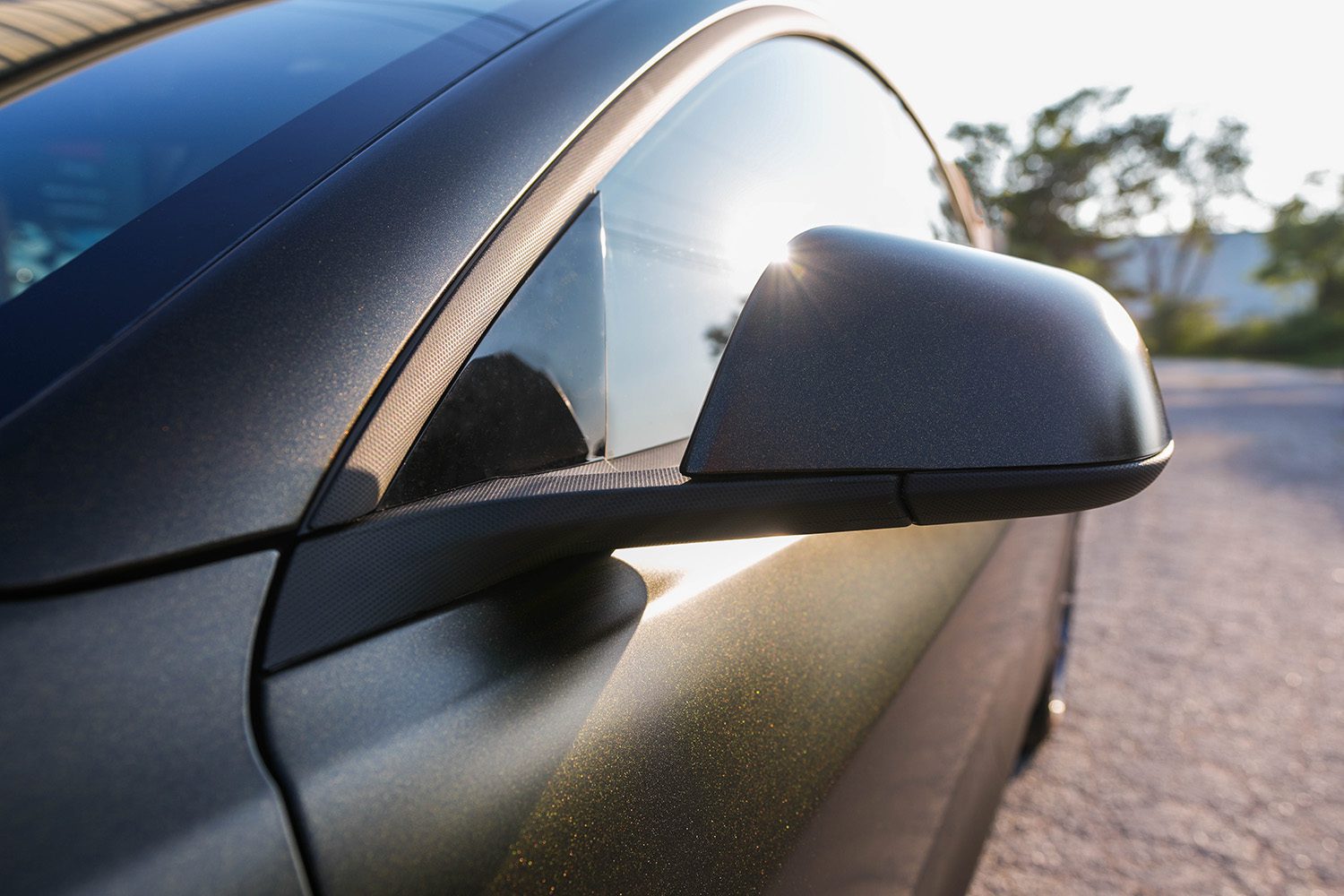
After 2.5 years, the original wrap had held up really well. The finish still looked clean, the metallic flake was still visible, and the color had not faded in a way that made the repair obvious.
Once the fresh vinyl was installed on the repaired side, we compared the newly wrapped section directly against the original 2.5 year old vinyl.
You couldn’t tell a difference.
Looking at the newly installed side next to the older side, it was hard to tell a difference. The biggest visible difference was not the vinyl color itself, but the fact that the older side could have used a better wash before the comparison.
That is a huge point for anyone considering a wrap.
Is Vinyl Wrap Color Stable?
High quality vinyl wrap can be very color stable, especially when you use premium cast films from proven manufacturers.
In this case, the wrap was 3M 2080. We also trust Avery Dennison SW900 for the same reason. These are premium cast films made with much tighter manufacturing and quality control standards than cheaper vinyl options.
That matters because color consistency is not just about how the vinyl looks on day one. It is also about how well it holds up over time and how consistent the color is from roll to roll when you need material later.
With premium brands, if the color is outside of spec during manufacturing, it generally does not get sent out to customers. That tighter quality control helps keep colors more consistent across batches.
This is one of the biggest reasons we recommend using high quality vinyl, no matter if you are wrapping a full vehicle or just accent areas.
A wrap is not just about how it looks the day it leaves the shop. It is also about what it looks like 2 or even 7 years later.
Why Cheap Vinyl Can Be Risky Later
Cheaper vinyl can look appealing because the upfront cost is lower, but the long term risk is higher.
A low quality vinyl may fade faster, shift color more noticeably, or vary more from batch to batch. That means if one door, bumper, or fender needs to be rewrapped later, the new piece may not match the rest of the car.
That can leave you with a repaired panel that technically has the same color name, but looks slightly different in real life.
On a full vehicle wrap, that difference can be obvious.
Why After Service Matters When Choosing a Wrap Shop
This is one part of the wrap industry that does not get talked about enough.
Everyone focuses on the initial install, the color, the finish, and the reveal. But what happens if you get into an accident later?
Before choosing a wrap shop, it is worth asking:
- Can I come back if a panel gets damaged?
- Do you keep records of the material and color used?
- Can you rewrap one section instead of redoing the entire car?
- Do you use premium films that are easier to match later?
- What does repair pricing look like?
A good wrap should not feel like a one time transaction. After service matters, especially if the car is your daily driver.
In our case, because we work on a lot of Teslas and use the same products we sell, we were able to move quickly. We already had experience with this color, the vehicle, and the panel layout.
That made the repair much smoother and faster.
Why Pre Cut Kits Help DIYer & Pros Alike
Another part of this repair that stood out was how much time a pre cut kit can save.
Instead of bulk installing and hand trimming every panel from scratch, we used a kit designed for the Tesla Model 3. That meant the shape, relief cuts, and edges were already built into the pattern.
For a professional shop, that saves time.
For a DIY installer, that makes the job feel much more approachable.
Large panels can feel overwhelming when you are trying to install vinyl all at once and for the first time. Pre cut kits break the job into a more controlled process. You can line up the piece, anchor it, work in sections, and follow the designed edges instead of guessing where everything should land.
At DIY Wrap Club, we make our own patterns and cut in-house, testing with non-installers to ensure a DIY-friendly kit is created. We provide all the tools, premium materials, and in-depth courses needed to get the job done successfully. We also listen to customer feedback. You know something that could help you install better, let us know!
On the professional side, there is sometimes a debate in the wrap world about bulk installing versus using templates. Some installers prefer to knife everything by hand. That can work well in the right hands, but when you are doing the same vehicle repeatedly, improving the process just makes sense.
A good pattern can make the work cleaner, faster, and more consistent.
Final Thoughts
Vinyl wrap color stability is one of the most important long term factors people overlook.
A great wrap should not only look good when it is new. It should give you confidence that if life happens, the car can be repaired without starting over completely.
This Model 3 was the perfect example. After 2.5 years on the road, the original 3M vinyl still matched the fresh material incredibly well.
That is why we recommend sticking with premium films like 3M 2080 and Avery Dennison SW900. They cost more than cheap vinyl, but they give you better color consistency, better long term stability, and a much better chance of a clean repair later.
If you are planning a Tesla wrap, the biggest takeaway is simple:
Use good material the first time, and future repairs become a lot easier.


