
There are moments when technology does not arrive with a bang, but with a shrug. No keynote. No ribbon cutting. No perfectly edited promo video. Just someone doing something that used to be impossible and realizing, halfway through, that the world has already changed.

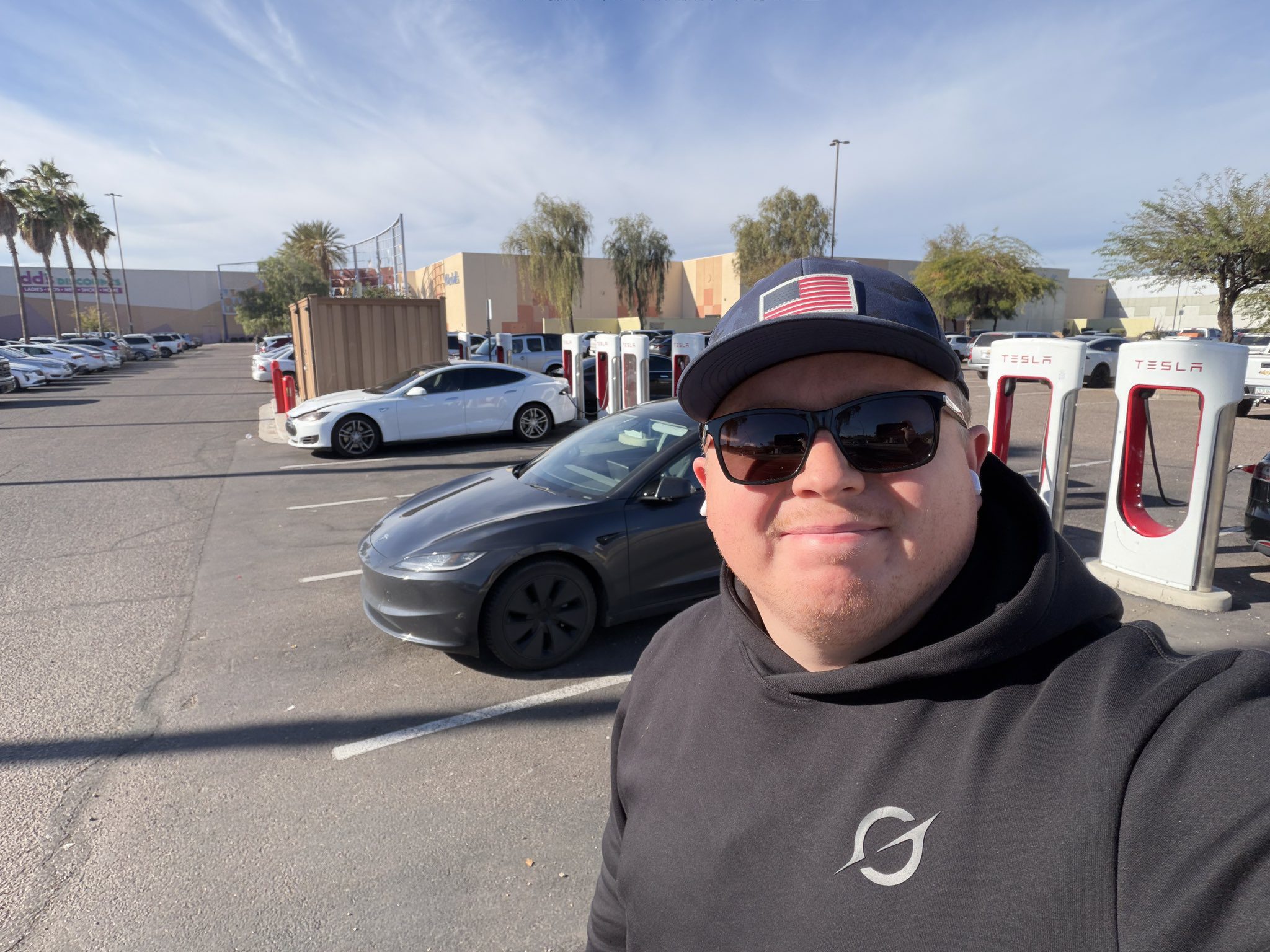
That is what happened when David Moss drove more than 11,000 miles across the United States using Tesla Full Self Driving without a single intervention.

Just supervision, patience, and an uncanny realization that the car was no longer the weakest link in the system.

“I’m just an average Joe. No Tesla shares. I’m just a guy who likes sitting in his car.”

This is not a product review.
It is not a hype piece.
It is a story about how autonomy quietly crossed a line while most people were busy arguing about whether it ever would.

The spark was not fame

David did not wake up one morning trying to become the “first.” There was no checklist, no sponsor deck, no plan to go viral. He bought a 2025 Model 3 Highland in late September, largely because he wanted the updated hardware before the tax credit disappeared. Like many Tesla owners, he already trusted the platform. Like very few, he trusted it enough to let it do almost everything.

By mid October, FSD version 14 was rolling out, and something felt different. Not just incrementally better, but qualitatively calmer. Less twitchy. More decisive. The kind of change you feel before you can fully explain it.

David likes to travel. He likes long drives. He set a personal goal to leave near the end of October, wander the country, and be home by Christmas Eve. At first, it was just a road trip. Then the stats counter appeared.

Tesla added a visible metric that tracked uninterrupted autonomous miles. It was supposed to be a fun novelty. A bragging point. A curiosity.

Instead, it became a quiet dare.

One day became a streak

The first test day was simple. Raleigh to Charlotte. A normal day of errands, food stops, chargers, hotels, parking lots. Thirteen stops. One hundred eighty six miles.

The counter never reset.

At the final stop, a hotel near the airport, the car navigated an outdoor lot with a ticket gate, grabbed the ticket, found a spot, and parked itself. David took a photo of the screen. Sent it to friends who did not care about Teslas. Sent it anyway.

That was the moment it stopped being a novelty.

From there, it snowballed. One day turned into two. Two into a week. A week into a full month of real-world driving without disengagement.

This was not highway-only autonomy. It was daily life autonomy.

The myth of “easy miles”

A common dismissal quickly emerged online. “Highways are easy.” “Night driving does not count.” “Anyone could do that.”

That criticism collapses under scrutiny.

David’s route covered more than thirty states before the official coast-to-coast run even began. Manhattan traffic. Dense city centers. Business parks. Hotels. Superchargers. Shopping malls. Gated communities. Tight driveways. Parking garages.

FSD parked itself repeatedly, sometimes more than a dozen times in a single day. It handled curbside drop-offs, complex lot geometries, and ambiguous environments where even humans hesitate.

In one case, the car navigated a driveway and parked directly behind a film crew without intervention. Not because it was scripted. Because it understood the space.

Highways were part of the story. They were not the story.

The coast to coast decision

By Thanksgiving, David was in Raleigh, North Carolina. Version 14.2 had dropped. The stats counter was still intact. The idea surfaced quietly.

What if he went coast to coast?

Not for a record. Not for a stunt. Just as a personal capstone. Something to tell his kids someday. Something to tell himself when he was older.

He planned conservatively. He avoided known forced disengagement zones, including border checkpoints. He added miles rather than risk a reset. He followed the law. He treated the software as supervised, not autonomous.

Safety was not negotiable.

The run added more than 6,500 miles to the streak. City streets. Rural highways. Urban congestion. All of it without touching the wheel.

Zero interventions.

The moments that never trend

The most important parts of the story are not the screenshots.

They are the moments when things went wrong for everyone else.

In Wyoming, David drove through sustained 80 mph winds during a winter advisory. Six semi trucks were tipped over within a hundred mile stretch. Any human driver would have been tense. Fatigued. Overcorrecting.

The Model 3 stayed planted.

It held the lane perfectly. No rumble strips. No drift. No panic corrections. The low center of gravity helped, but the micro adjustments never stopped. It was relentless and calm at the same time.

On highways, FSD avoided sudden debris. Buckets falling from trucks. Large pieces of plywood. Roadkill. Objects that appear too late for a tired human to process cleanly.

On rural two lane roads, it squeezed past oversized mobile home trailers that consumed nearly an entire lane, using shoulders only when necessary.

“If it only saves you once, it’s worth its weight in gold.”

Supervision is still the rule

David is explicit about one thing. This was not unsupervised driving.

Hands stayed close. Eyes stayed alert. If safety demanded a disengagement, the streak would have ended without hesitation. No number on a screen was worth risking a life.

That mindset is precisely why this story matters. This was not someone trying to “beat” the system. It was someone respecting it.

The irony is that the more responsibly it was used, the more it proved itself.

What FSD still gets wrong

Even at this level, Full Self Driving is not finished.

Parking lots remain slow and occasionally indecisive. Choosing specific parking spots is not yet possible. The lack of scroll wheel speed adjustments frustrates experienced users. Certain speed limit interpretations still lag behind human intuition.

These are not trivial issues. But they are also not existential ones.

The core problem of driving, perceiving, predicting, and safely navigating complex environments, is no longer the bottleneck.

Why 11,000 miles matters

The average American drives roughly 12,000 miles per year.

David nearly matched that in 3 months without intervention.

For Tesla engineers, it validated a vision first promised years ago. For skeptics, it raised an uncomfortable question. If this is already possible, what are we arguing about?

For drivers, it reframed the act of travel itself. Less fatigue. Fewer micro decisions. More energy at the destination. Driving becomes supervision instead of labor.

The human reaction

David never chased attention. It found him anyway.

Millions of views. An Elon Musk retweet. Messages from Tesla engineers and former executives. Media coverage from local news to national outlets. Conversations with automotive legends he grew up watching.

What surprised him most was not the fame. It was realizing people cared.

He had watched others chase records. Cannonball runs. EV charging feats. He never thought quietly letting a car drive would resonate more.

In hindsight, his only regret is not documenting more. More photos. More videos. More evidence for a world that still does not realize autonomy has already arrived.

What comes next

David plans to drive with FSD in all 50 states.

If 11,000 miles marked the threshold moment, the next chapter will not be about proving it works.

It will be about realizing we no longer need to prove it at all.

Autonomy did not arrive with fireworks.

It arrived with a guy who likes sitting in his car, driving home for Christmas, and realizing he was less tired than ever before.

By the time most people notice, it will already be normal.

Q and A

Who is David Moss and why does that matter?
David is not a Tesla engineer, influencer, or professional driver. He sells LiDAR scanners for a living and spends a lot of time on the road. That matters because this was not a controlled experiment or a company demo. It was a normal person using the car the way real people actually do. Errands, hotels, chargers, parking lots, bad weather, boredom, fatigue, and real consequences.

Was this really zero intervention?
Yes. Zero disengagements of Full Self Driving during the 11,000+ mile streak. That does not mean zero supervision. Hands were ready, eyes were up, and safety always came first. But at no point did he take over steering, braking, or throttle because the system failed.

Was this mostly highway driving?
No. Highways were part of it, but not the majority of the challenge. The streak included city streets, dense urban traffic, parking garages, gated communities, office parks, hotels, superchargers, and complex parking lots. The system parked itself repeatedly, sometimes more than a dozen times in a single day.

Did he avoid difficult situations on purpose?
He avoided situations that would force a disengagement regardless of performance, such as border checkpoints. That was intentional and responsible. He did not avoid weather, traffic, construction, or unfamiliar environments. If anything, he added miles to stay safe rather than cut corners for the sake of a streak.

What FSD version was used?
The bulk of the streak occurred on Tesla Full Self Driving version 14 and 14.2. The visible autonomy stats counter appeared with 14.2, which is when the uninterrupted miles became publicly trackable.

What does FSD still struggle with?
Parking lots remain its weakest area. It is cautious and sometimes slow. Drivers cannot yet select specific parking spots. Speed limit interpretation occasionally lags behind human intuition. Many experienced users miss manual speed adjustment via the scroll wheel. It also doesn’t do fast food drive thrus quite yet. These are usability issues, not fundamental driving failures.

Was this safe or just lucky?
Luck always exists on the road, with or without autonomy. What makes this meaningful is that the system repeatedly demonstrated awareness, prediction, and control in situations where human error is common. This was not about pushing limits. It was about reducing risk over time.

Did other drivers react negatively?
Surprisingly, no. David reports being rarely honked at and never aggressively confronted. Most people around him had no idea the car was driving itself. The behavior was smooth, legal, and predictable enough to blend into normal traffic.

Is FSD actually better than a human driver?
David believes it is, and says so bluntly. Not because it is perfect, but because it is consistent, tireless, and always paying attention in every direction at once. Unless someone believes they are an outlier among drivers, it is hard to argue the system is not already safer in many scenarios.

Why does 11,000 miles matter specifically?
The average American drives about 12,000 miles per year. This single streak represents roughly a full year of driving for most people. Compressing that experience into one uninterrupted run makes the implications harder to dismiss.

Why did this resonate so strongly online?
Because it was not supposed to happen yet. Tesla had talked about coast-to-coast autonomy as far back as 2017. Years passed. Skepticism grew. Then one person quietly did it without fanfare, without Tesla staging it, and without planning to become a headline.

What is his advice to skeptics?
Try it yourself. Demo it at a service center. Rent a Tesla. Experience it firsthand. The debate changes quickly when it is no longer theoretical.

What comes next?
David plans to drive with FSD in all 50 states, including Hawaii and possibly Alaska. But the bigger shift is not about records anymore. It is about normalization.