
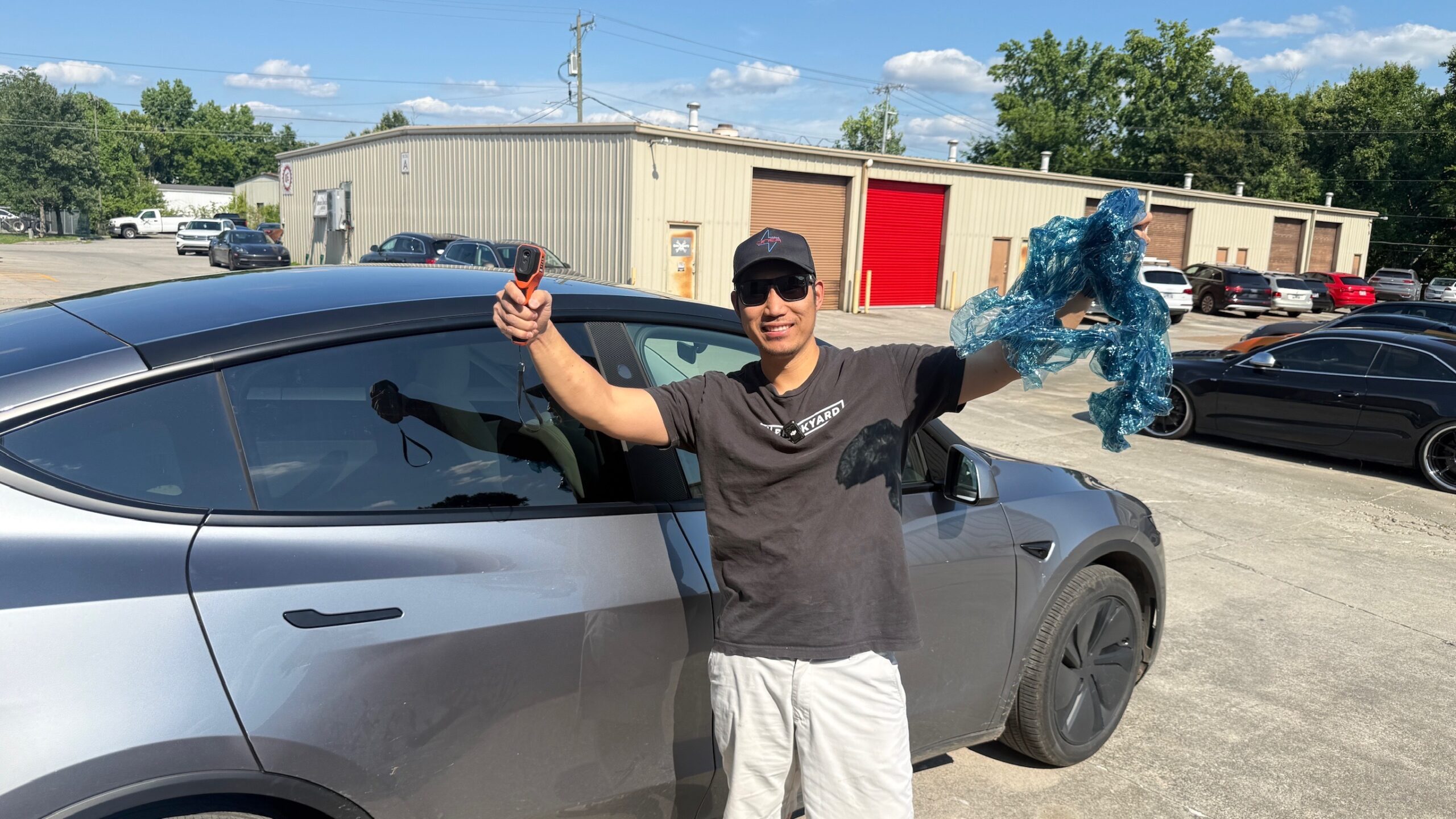
If you’ve been following our recent YouTube videos, you’ve probably noticed we’ve been talking a lot about Roof Tinted PPF for Teslas. One question comes up more than any other:
Does it actually work?
Instead of saying “trust us,” we wanted to test it ourselves using real Teslas sitting outside in the Tennessee sun.
Here’s what we found.
Why Tesla Glass Roofs Feel So Hot
Modern Teslas already do a great job blocking harmful UV rays. The factory panoramic roof is designed to reject most ultraviolet light and a significant amount of infrared energy.
So why does your head still feel like it’s baking?
The answer isn’t necessarily the sunlight passing through the glass.
It’s the glass itself.
As sunlight hits the roof, the glass absorbs a tremendous amount of heat. That heat is then radiated back into the cabin, especially toward your head since you’re sitting directly underneath it.
If you’ve ever reached up and touched your glass roof on a hot summer day, you already know just how hot it gets.
Our Test Setup
We wanted to keep things simple and realistic.
We parked two Teslas outside for several hours in direct sunlight on an 84°F day in Chattanooga, Tennessee.
One vehicle had our 71% VLT Light Blue Roof Tinted PPF installed.
The other vehicle was used to demonstrate our 17% VLT Dark Roof Tinted PPF option.
Using:
- Cabin temperature readings
- An infrared thermal camera
- Surface temperature measurements
we documented exactly what happened before and after removing the film.
Before Removing the Roof PPF
After sitting outside for hours:
- Cabin temperatures measured roughly 97–98°F
- Glass surface temperatures reached approximately 140–150°F
- Interior surfaces like the center console were already over 100°F
That’s a lot of heat building inside the cabin.
Then We Removed the Film
Instead of comparing two different vehicles with different variables, we removed the Roof Tinted PPF from the same Model Y and allowed it to continue sitting in the sun for another 30–40 minutes.
This let us compare the same vehicle under nearly identical conditions.
The result?
Cabin Temperature Increased
The interior temperature climbed to approximately:
101–103°F
That’s roughly 4–6°F hotter than when the roof PPF was installed.
While that might not sound dramatic on paper, anyone who has climbed into a hot Tesla knows even a few degrees can make the cabin noticeably less comfortable.
Why Exterior Roof PPF Works Differently Than Window Tint
Many people ask:
“Isn’t tint supposed to go on the inside?”
Normally, yes.
Traditional ceramic window tint is designed for interior glass installation.
Roof Tinted PPF is completely different.
It’s a thermoplastic polyurethane (TPU) film specifically engineered for exterior roof installation.
Unlike standard window tint, it provides several benefits at once:
- Heat reduction
- Rock chip protection
- Scratch resistance
- Self-healing surface
- Hydrophobic water beading
- Easy removal when needed
Because it’s installed on the outside of the roof, it also protects the glass itself from everyday impacts.
Added Protection for Expensive Glass
The product actually started because of a real-world problem.
After a rock struck the rear portion of a Tesla roof and cracked the glass, we started asking ourselves:
“What if we could protect the roof the same way we protect painted panels?”
That eventually led to developing an ultra-clear TPU film specifically designed for panoramic Tesla roofs.
The heat reduction became an additional benefit—not the original goal.
Is It Lease Friendly?
Yes.
One of the biggest concerns people have is whether installing an exterior roof film could damage the glass or leave behind adhesive.
During our testing, we removed the film while it was hot from sitting in the sun.
The results:
- No visible adhesive residue
- Clean removal
- Glass looked exactly like it did before installation
While no adhesive product can guarantee absolutely zero residue in every situation, our testing has shown the film removes extremely cleanly when installed and removed properly.
Choosing Between 17% and 71% VLT
We currently offer two different tint levels.
71% VLT (Light Blue)
Perfect if you:
- Want to maintain an open panoramic feel
- Still enjoy looking through the roof
- Want subtle heat reduction without making the cabin feel darker
Many owners say they don’t even notice it’s installed until they see water beading off the roof.
17% VLT (Dark)
Ideal if you:
- Live in extremely sunny climates
- Prefer a darker cabin
- Want maximum shade from the panoramic roof
Despite being much darker, visibility through the glass remains surprisingly clear from inside the vehicle.
Other Benefits You’ll Notice
Beyond reducing cabin heat, Roof Tinted PPF also offers everyday advantages:
- Easier cleaning thanks to its hydrophobic coating
- Self-healing surface that resists light scratches
- Protection against rock chips
- Helps preserve the panoramic roof during long-term ownership
- Designed to last for years with proper care
Our Take
No product is going to make your Tesla stay cool while parked for hours in direct sunlight.
But our testing showed something important:
Keeping Roof Tinted PPF installed helped slow heat buildup inside the cabin compared to the same vehicle without it.
Combined with the added protection against rock damage and scratches, it’s become one of our favorite upgrades for Tesla owners who spend a lot of time parked outdoors.
Whether you choose the subtle 71% version or the darker 17% option comes down to your personal preference, but both provide the same core benefits of protecting your roof while helping reduce the amount of heat radiating into your cabin.
If you’re looking for a practical upgrade that improves comfort while also protecting one of the most expensive pieces of glass on your Tesla, Roof Tinted PPF is worth considering.


