
For years, paint protection film (PPF) has been all about one thing: protecting your vehicle.
Originally developed for military and motorsports applications, PPF eventually made its way onto exotic cars, daily drivers, and eventually Teslas. Its job was simple: act as a sacrificial layer that protects paint from rock chips, scratches, bug splatter, road debris, and UV damage.
Then things started to change.
First came matte and satin PPF, giving owners a way to completely transform the appearance of their vehicle while still maintaining protection.
Then came color PPF, allowing people to change the color of their car without traditional vinyl wrap.
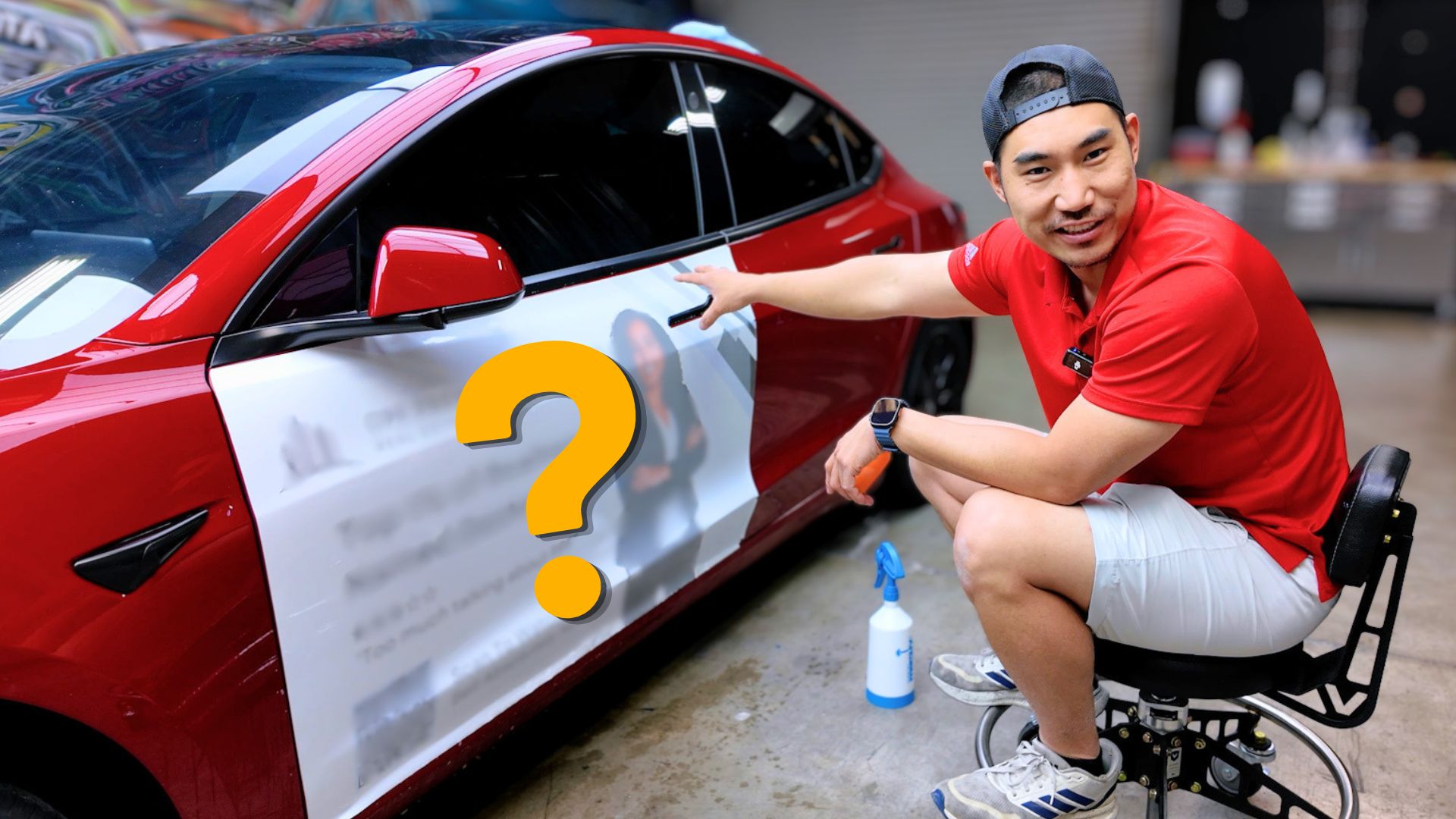
Now there’s another innovation starting to emerge: Printed PPF.
The question is… can you actually print graphics, branding, artwork, or custom designs directly onto paint protection film?
The answer is yes.
But it’s not quite that simple.
What Is Printed PPF?
Printed PPF combines the protection of traditional paint protection film with the customization capabilities of a printed vehicle wrap.
Imagine:
- Custom graphics on rocker panels
- Company branding on work vehicles
- Unique accent designs
- Personalized artwork
- Logos and business information
- Limited edition vehicle graphics
Instead of installing vinyl graphics and then protecting them with a separate layer of PPF, the goal is to combine both into a single product.
One installation.
One material.
Protection and customization together.
Why Printing on Traditional PPF Doesn’t Work
At first glance, it seems easy.
Take a roll of clear PPF, load it into a printer, and start printing.
Unfortunately, modern paint protection film isn’t designed to be printed on.
Most premium PPF products feature a highly hydrophobic top coat. This layer is designed to repel water, dirt, bug residue, bird droppings, and contaminants.
It’s one of the reasons modern PPF performs so well.
But that same hydrophobic layer creates a major problem for printing.
The ink struggles to bond to the surface.
Instead of embedding into the material, the ink sits on top of the film.
This creates several issues:
- Poor adhesion
- Reduced color vibrancy
- Smearing
- Premature fading
- Poor long-term durability
In our early testing, we found that eco-solvent ink could literally be scratched or rubbed off the surface because it wasn’t properly bonding with the film.
That’s obviously not acceptable for a product expected to survive years of weather exposure.
The Challenge of Hydrophobic Coatings
Modern PPF manufacturers spend enormous amounts of time developing top coats that resist staining and contamination.
That’s great for vehicle protection.
It’s terrible for printing.
The more effective the hydrophobic layer becomes, the harder it becomes for ink to properly adhere.
That’s why many traditional PPF products simply aren’t suitable for direct printing.
Even some color PPF products suffer from similar limitations because they still utilize protective top coat technology.
The Search for a Printable PPF
To solve the problem, manufacturers need a specialized substrate designed specifically for printing.
Instead of fighting against the hydrophobic layer, the film itself must be engineered to properly accept eco-solvent or UV inks.
This allows the ink to penetrate and bond with the material rather than sitting on the surface.
The result is:
- Better adhesion
- Better durability
- Improved color saturation
- Longer lifespan
- More reliable performance
This is where the next generation of printable PPF is headed.
Eco Solvent vs UV Printing
When discussing printable PPF, two common printing technologies dominate the conversation.
Eco Solvent Printing
Eco solvent printers use inks that partially penetrate the printable surface.
The process takes time, often requiring several hours for the solvents to fully gas out and cure.
Benefits include:
- Flexible graphics
- Proven vehicle wrap technology
- Excellent outdoor durability
UV Printing
UV printers apply droplets of ink that are instantly cured using ultraviolet light.
Benefits include:
- Immediate curing
- Faster production
- Sharp image quality
- Strong color reproduction
Both methods can work with printable PPF when paired with the proper substrate.
Why Lamination Is Still Important
Even when using a printable PPF substrate, an additional protective layer is often necessary.
Just like traditional vehicle graphics, printed surfaces need protection from:
- UV exposure
- Abrasion
- Chemicals
- Weathering
- Road debris
A clear laminate helps preserve the printed image and significantly increases long-term durability.
Without it, even properly adhered inks can eventually degrade from environmental exposure.
Commercial Vehicles May Be the Biggest Opportunity
Most people immediately think about custom graphics for enthusiasts.
But commercial fleets may actually benefit the most from printable PPF.
Think about:
- Plumbers
- Electricians
- HVAC companies
- Realtors
- Delivery fleets
- Service vehicles
These vehicles spend all day on the road.
They’re constantly exposed to rock chips, scratches, and wear.
At the same time, they’re rolling advertisements.
Today, many companies install vinyl graphics and then apply PPF over high-impact areas for protection.
Printable PPF could potentially eliminate that extra step.
One product.
One installation.
Long-lasting branding and protection in a single solution.
What About DIY Installers?
The DIY market could also see some exciting possibilities.
Traditionally, many DIY PPF customers focus purely on protection.
- Rocker panels.
- Door edges.
- High-impact areas.
But what if those protective pieces also featured custom graphics, accents, textures, or branding?
Printable PPF could allow owners to add personalization while still maintaining the protective benefits that made PPF popular in the first place.
As more Teslas hit the road every year, owners are constantly looking for ways to make their vehicles stand out.
Printed PPF could become another tool in that customization toolbox.
Challenges Still Remain
While the potential is exciting, printable PPF still faces several challenges:
- Finding the ideal printable substrate
- Achieving vibrant color reproduction
- Maintaining long-term durability
- Preserving self-healing properties
- Scaling manufacturing
- Managing production costs
The technology is still evolving, and there is plenty of testing left to do.
Is Printed PPF the Future?
We think it has massive potential.
The ability to combine customization and protection into a single material solves a problem that has existed in the vehicle wrap industry for years.
Whether it becomes mainstream for enthusiasts, commercial fleets, or both remains to be seen.
But one thing is clear:
The PPF industry continues to evolve at an incredible pace.
From matte finishes to color PPF, dry-apply technologies, and now printable PPF, we’re seeing more innovation than ever before.
And we’re just getting started.
We are actively working with our manufacturer to produce a film that can be printed on successfully. Subscribe to our YouTube channel for part 2 coming soon!
What would you use printed PPF for?
Custom graphics?
Business branding?
Tesla personalization?
Let us know. The future of vehicle protection might be a lot more colorful than anyone expected.

